Showing posts with label Small Copper. Show all posts

Tuesday, 7 August 2018

Transect Update - Weeks 18 and 19.


On my last two weekly walks I thought the conditions were ideal for butterflies, with temperatures in the mid 20's and plenty of sunshine, but only 10 separate species were logged and in very low numbers. However the photo opportunities for several species; all seen in Section 4, a large open glade; made up for the lack of overall activity.

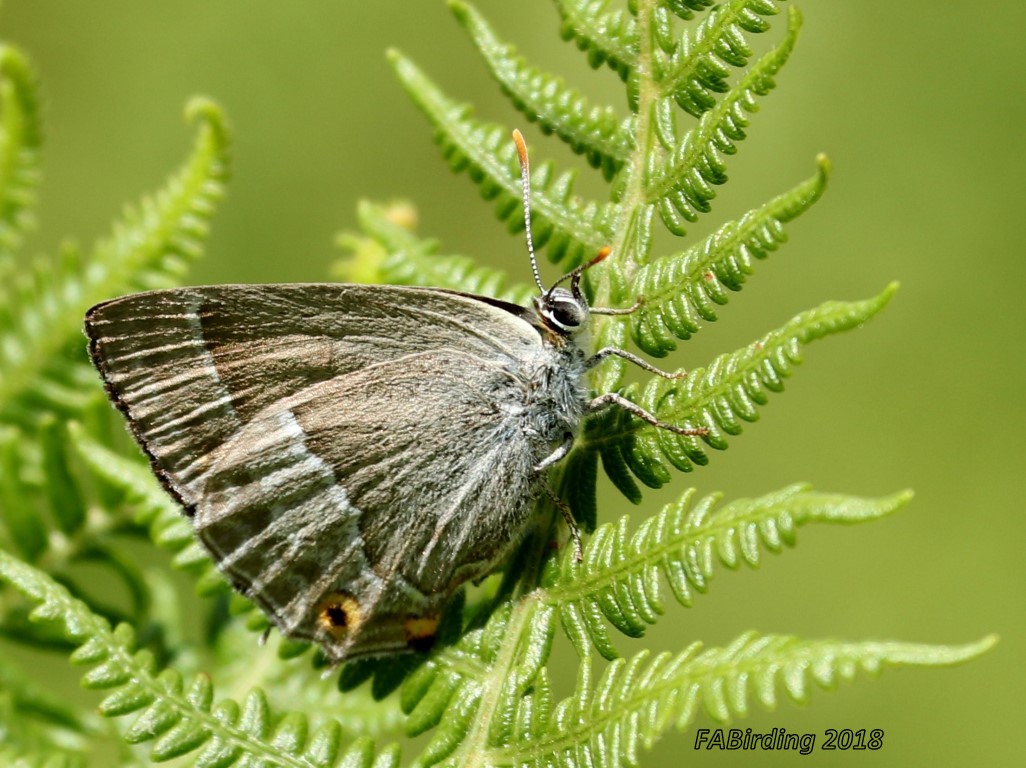
One of seven Purple Hairstreaks recorded over the last two weeks and brings this seasons total up to 96 individual sightings for this species..


The highest tally of just 10 for an individual species was the diminutive Brown Argus


Flying in the same area as the Brown Argus were several male Common Blues, the first of two new species recorded on the transect since I started in 2015, but I only managed an underwing shot (below).


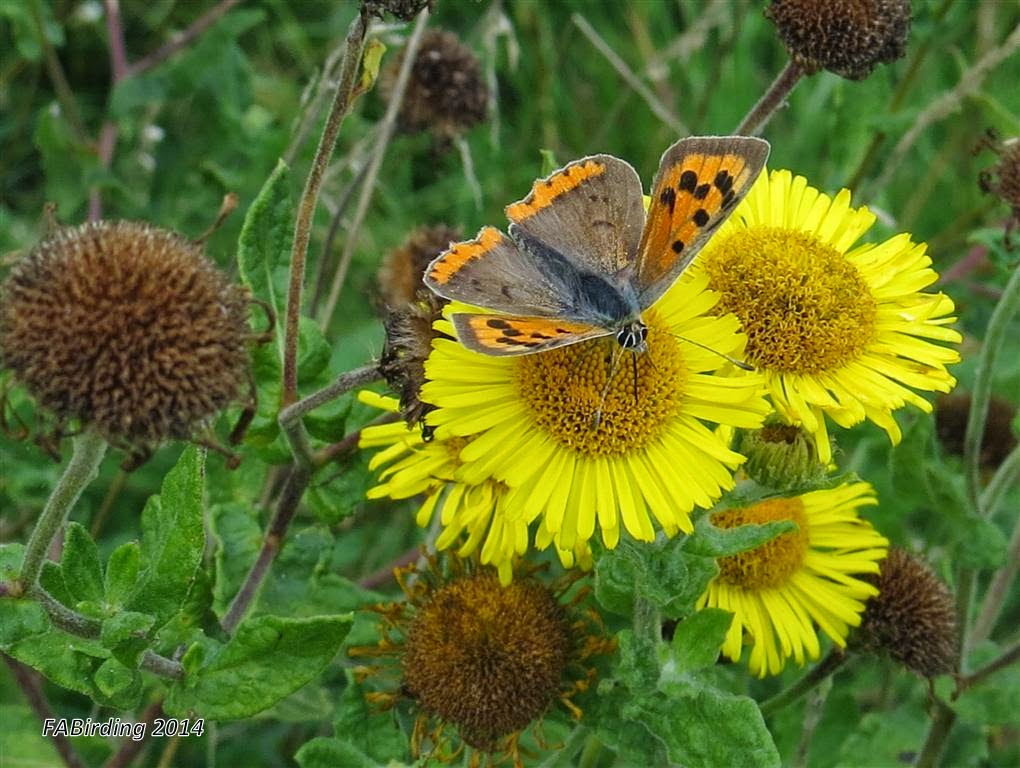
The second new sighting was the Small Copper (below) with 5 individuals counted over the last two weeks.

This little flutter definitely thrives in hot, sunny conditions. In good years three or even four broods might be produced but if the summer weather turns cool and wet the populations crash and can take several years to recover.


Linking to:
Nature Notes.

Saturday, 22 July 2017

Flutters on Headley Heath.

On Thursday, together with 15 other enthusiasts, I took part in a butterfly walk at Headley Heath with its mixed habitats of heathland, chalk downland and mixed woodland. During the first hour there was very little 'flutter' activity due to the blustery wind and light rain showers but from mid-day onwards things brightened up and we eventually logged 22 species.

Once again the new macro lens was in action and here are just a few of the species I photographed.

 Chalkhill Blue (male).

Silver-Y Moth.

Small Copper (male).

While there were a few Common Blues on the wing once the sky brightened up it was very pleasing to find a Brown Argus, initially perched with closed wings and then it decided to show its upper wing surfaces.


Just before we stopped to consume packed lunches one person spotted and photographed a White-letter Hairstreak but it promptly flew away. After lunch we staked out the location and eventually relocated this fairly worn individual.

Several Silver-spotted Skippers were seen and I managed a clearer shot than my previous effort earlier in the week at Juniper Bottom.

Unfortunately the woodland failed to produce a sighting of a Purple Emperor BUT we saw plenty of Purple Hairstreaks (see below).

Initial views were individuals flitting around the Oaks, often at very low level and then one tame individual perched on our leader's finger for its photo call!


Linking to:

Monday, 1 August 2016

Small Copper.


Encountering the delightful Small Copper (Lycaena phlaeas) always lifts the spirits.

This species thrives in hot, sunny conditions, usually in small, discrete colonies and whilst considered common it has has suffered substantial declines over the last century due to habitat loss, but relatively poor weather in recent years may also be aggravating this decline. Last year our dry spring was followed by the coldest and wettest summer for three years and the Small Copper suffered its worst year on record with numbers falling a quarter compared to 2014.

I didn't see any of the spring brood and only two individuals when these images were taken on 23 July this year. If the right conditions prevail there might be a third brood and possibly a fourth partial brood into November.


Linking to:
Nature Notes

Thursday, 13 August 2015

Friday Flutters - Weekly Update.


Despite the lack of sunshine over recent days the collage above proves there are still a few colourful butterflies to be found around my local birding patch, providing some photo opportunities, in lieu of the avian species that are all still hiding from my lens.

First up was a single Small Copper (Lycaena phlaeas) that alighted briefly beneath my feet before moving onto another leaf and then promptly closing its wings!

A few male Common Blue (Polyommatus icarus) were obvious as they flitted hither and thither before disappearing deep into the grasses to rest briefly before their next territorial foray.


I saw a few Meadow Browns but as expected the Gatekeepers (Pyronia tithonus) were far more numerous but not very active under a cloudy sky. The undersides of both sexes are very similar but this one opened its wings (below) to reveal a female.

A very fresh Red Admiral (Vanessa atalanta) landed on a old tree stump and provided a different splash of colour.


As I walked over the upper grassy meadow a couple of male Small Heath (Coenonympha pamphilus) were chasing one another and this was one of the few occasions I have managed to get a shot as this tiny flutter that is so well camouflaged when it settles deep amoungst the grasses.

The star find of the week was a resting Painted Lady (Vanessa cardui), a migrant species that visits our shores from North Africa. Interestingly I photographed this individual within 50 yards of a single sighting I recorded here during August last year.

With the present unsettled weather pattern it might be a while before I get some more photo opportunities.

Tuesday, 23 September 2014

More Coppers than Blues.


My patch walk today at Epsom Common was fairly quiet bird wise. Two Grey Herons on the Great Pond; one hiding in the margins and one (above) slowly wandering out into the open water.

Also logged the usual Mallard and Moorhen. At least four juvenile Chiffchaff were seen flitting through the waterside willows gleaning insects plus Robin and Blue Tit in the woods. Out on the grassland I saw the usual corvids; Carrion Crow, Jackdaw, Magpie plus several Jays and disturbed a noisy Green Woodpecker while watching a Kestrel being harassed by two Crows. Three House Martins were also busily chasing insects high overhead.

Apart from a few Speckled Woods on the wing I located several Small Copper (Lycaena phlaeas). These very tiny but delightful flutters were initially very mobile but I eventually located one at rest in an area that had recently been frequented by the cattle that are drafted in every summer to help manage this habitat. Fortunately they have now departed but evidence of their prior activities is everywhere!


While photographing this individual (above) and trying to be careful where I knelt I noticed another brighter specimen close by with slightly different markings.

The very distinctive row of blue spots on the hindwing indicate that this is the fairly common variation known as caeruleopunctata.

The only other butterfly seen was a solitary Common Blue (Polyommatus icarus) that was extremely evasive as it searched constantly for nectar over a wide area with very few sources still in flower.  FAB.

Tuesday, 16 September 2014

Solitary Small Copper.


During a butterfly foray today close to the southernmost border of Surrey I came across a  solitary but very restless Small Copper (Lycaena phlaeas) flying around and occasionally landing to feed on one of the many patches of Common Fleabane, its  popular nectar source.


All images taken with the PowerShot SX50 HS.   FAB.

Sunday, 29 June 2014

Follow the Leader.

Last week I joined two walks organised by the Surrey and South West London Branch of Butterfly Conservation.

The first was to Mitcham Common, a previously unvisited location for me. The original oak woodland was cleared with the arrival of early Neolithic people, and subsequently kept open and infertile through agricultural practices such as grazing. Due to the nature of the underlying gravels, the inherent soil is largely acidic and infertile. In the early 19th Century the gravels were extracted for road building leading to the creation of Seven Islands Pond amongst others. During the 20th century some of the ponds created by gravel extraction were filled in between the wars and ploughed for agriculture to aid the war effort. Also during the mid to late 1900s areas were used as landfill for inert waste. This destroyed parcels of valuable wet habitat, and irrecoverably altered the hydrology and topography of the Common, now a mosaic of grassland, acidic heath and pockets of mixed woodland. 

Mitcham Common - Images courtesy of www.geograph.org.uk

The leader was Malcolm Bridge and during a two hour stroll the group saw 14 species. Part of our time was spent searching for a rare species, the White-letter Hairstreak, in a small area containing a few young Elms. I managed a brief glimpse of a perched individual through my bins before it disappeared into the high canopy. 


For the next 20 minutes or so the group scanned the canopy often suggesting that they had a number of brief sightings but when I took a few shots of a wing above a leaf some 40 feet overhead it turned out to be a Holly Blue!


After the walk finished I took a stroll around the grasslands behind the Mill House Ecology Centre and added Small Copper and several Marbled Whites to my list.

Cinnabar Moth Caterpillars on Ragwort, Comma and Small Copper.

The second walk was led by Francis Kelly at Whitmoor Common which comprises a series of sandy heathland pockets surrounded by woodland. The commons were once grazed by the commoners' stock which helped maintain the open aspect but since the cessation of these rights and traditions, the commons have increasingly become prone to afforestation by the natural invasion of Scots pine and silver birch. 

A large pond in the centre of the common is a major focus for dragonfly activity in the area, with 19 species being recorded in or around the vicinity of the pond itself.

Male Broad-bodied Chaser.
I recorded Emperor, Four-spotted and Broad-bodied Chaser, Black-tailed Skimmer plus Common and Azure Damselflies. Downy Emerald is another specialist species found here .. typically found in the shaded areas under overhanging vegetation, but not seen on this occasion.
My bird sightings included Common Buzzard, Kestrel, Blackcap, Willow Warbler, Jay, Wren, Blackbird, Linnet, Stonechat and on the pond, Mallard plus Little Grebe feeding its chick.

In the woodland caterpillars of the Peacock butterfly were busily feeding on Common Nettle, their main larval food-plant .


The main attraction out on the open heath was the tiny Silver-studded Blue. I had previously seen this species on Thursley Common but was hoping for some better images

My first sighting was a dark brown female who wouldn't stop for a photo call and then a handful of males were spotted during our lunch stop and one individual basked long enough for a few shots.


 Male Silver-studded Blue (Plebeius argus) [Shot using PowerShot SX50 HS and cropped]

I logged 16 species throughout this walk but I believe the groups total was probably higher. I might join a few more of these field trips over the coming weeks if only to improve my knowledge of the different butterfly habitats and the chance to add to my image portfolio.   FAB

Monday, 19 May 2014

Taking it Slow and Easy.


With much warmer temperatures forecast for today I drove to Riverside Country Park for a very leisurely stroll. While the grassland areas were covered in yellow a traverse of the marsh boardwalk didn't produce any wildlife images but I did see Swift, Reed Bunting, Sedge Warbler, Wren, Blackbird, Blue Tit and heard Common Whitethroat and Blackcap. No Terns on the lake raft as two Canada Geese appear to have taken up residence.

Alongside the path I spotted one Common Blue (Polyommatus icarus) butterfly taking a well earned rest.


Turning onto the towpath alongside the River Wey Navigation all the male Mallard were also chilling out together.


A Small Copper (Lycaena phlaeas) briefly rested close to my feet. Such a colourful dainty butterfly.

The real waterside action was the extraordinary numbers of Banded Demoiselles (Colopteryx splendens). The males were flitting hither and thither not perching for long in case they missed the very sparce numbers of females on the wing.

At Bowyers Lock I met up with Brian and his wife who take it slow and easy every day as they have been living on their narrow boat ever since retirement, traveling the length and breadth of our waterways.

They were heading downstream to join the River Thames and after an interesting chat it was time for me to head home.  FAB.

Linking to NATURE NOTES 

LinkWithin

Related Posts with Thumbnails