Showing posts with label Avocet. Show all posts

Sunday, 18 August 2013

Cley Marshes NWT Reserve.


During our recent long weekend on the North Norfolk Coast we made regular visits to Cley Marshes NWT Reserve but often only stopping off at Bishops Hide to scan over Pats Pools before heading elsewhere along the coast. 

More often than not any waders present were always too far away but there was always a few other species that ventured a little closer to the hide.


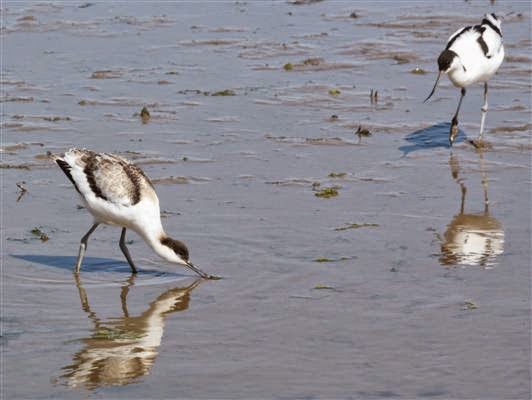
Avocet constantly feeding, Shelduck parents aggressively chasing off anything that got close to any of their 15 goslings and Coot just showing off.

Throughout our numerous visits over the years it has been unusual for us not to see Marsh Harriers quartering over the extensive reed beds but this activity is often interspersed with long periods when individuals perch atop one of the few trees as they monitor their options for their next foray.

Fortunately our visits coincided with the flight of this majestic species so the opportunity was grabbed to capture a few images as one individual effortlessly glided close to the hide.


(Western) Marsh Harrier (Circus aeruginosus)


These brief forays by the Harriers often result in pushing the various waders into the air and on more than one occasion it was a decent sized flock of Black-tailed Godwits (Limosa limosa) that felt threatened but it didn't take them too long to resettle on the far side of the pool. 
During this frenetic activity I did notice that there was one Godwit feeding alone much closer to the hide and it decided not to take to the sky so my attention turned to it as it's particular colouring suggested that it might just be a different sub species.


What struck me about this particular individual was that its rufous summer plumage extended much further down the breast suggesting that this could be an Icelandic Black-tailed Godwit (Limosa limosa ssp. islandica). Unfortunately it's legs, which should be shorter, were never fully exposed but everything else including the slightly shorter bill length indicated 'islandica'. [I would be interested to here what any of my readers think about its ID].

On one particular day we decided to spend longer at Cley and undertook a leisurely anticlockwise circuit of the whole reserve. 

After leaving Bishops Hide we headed up onto the East Bank towards Arnold's Marsh where a Black-winged Stilt had reportedly been seen but we couldn't find it. However we did get views of  four Spoonbills and a hastily taken shot as three of them they decided to move location. Scanning the marsh did produced Spotted Redshank, Greenshank and Ringed Plover.


Dropping off the bank to get some relief from the stiffening breeze I was totally surprised when I found a Painted Lady and managed a couple of shots before it flew away. (My first sighting this year.)

Climbing up onto the shingle sea defence bank provides a good spot to scan all over the reserve and across the sea but there was little activity apart from a few gulls, Cormorant and the occasional flypast of Sandwich and Common Terns returning from fishing trips with food for their growing youngsters.
Anita, always ready to help carry the gear, has often commented that she would never have thought 40 yeas ago that, as a 'townie', she would ever be interested in birding and wildlife but that's why I admire her so much as we continue to enjoy our life together.

 
A brief visit to the North Scrape hide didn't produce any more photo opportunities so we strolled on past the beach car park and then along the West Bank, watching flying Little Egrets, before returning to the boardwalk  and back to the Visitor Centre for some much needed refreshments.


Once again a very enjoyable visit to Cley Marshes and I'm sure it won't be our last.  FAB.


Linking to Camera Critters and I'D-Rather-B-Birdin' 

Tuesday, 13 August 2013

Norfolk Weekend Preview.

On 2nd August we headed off to the North Norfolk Coast for an extended long weekend to celebrate our 40th Wedding Anniversary. Our hotel at Kelling had recently been refurbished and provided excellent accommodation, superb meals and was, of course, ideally situated to enable us to do some very relaxed birding nearby at Cley Marshes and a few other locations a bit further along the coast.

I won't bore you with a list of species seen during our four days away but here is is just a taster of some of the birds we enjoyed watching.

 Black-tailed Godwit in its glorious rusty-orange breeding plumage.

 Shelduck family with 15 ducklings.

One of the many highlights at Cley Marshes was watching the Marsh Harriers quartering the reed beds, occasionally putting any waders into the air and often being mobbed by one of the Black-headed Gulls.
 Marsh Harrier.

At Titchwell Marsh one of the older hides enabled us to get closer views of some species, including Northern Lapwing and many of the juvenile Avocets plus distant views of Dunlin, Ruff, Knot, Common Snipe and 3 Spoonbills.
 Northern Lapwing.

 Avocets (Adult keeping a watchful eye on a juvenile feeding).

Juvenile Avocet.

On the day of our Anniversary I booked a place on one of the boat trips from Morston Quay so we could view the Grey and Common Seals out on Blakeney Point with the added bonus of watching Common, Sandwich and Little Terns fishing fairly close to the boat.

Lazy Seals on Blakeney Point.

I will be sharing a few more images from this very enjoyable and relaxing trip in some future posts.  FAB.


Sunday, 16 June 2013

Birding Day in Suffolk and Norfolk.

On Friday I left home in the wee small hours and at 5am met up with six other birders at RSPB Lakenheath in Suffolk. The site has been playing host recently to rare birds such as Savi's Warbler and Red-footed Falcon and is probably the only regular breeding location in the UK for the 'RED listed' Golden Oriole plus home of the Common Crane that first bred there in 2007. Indications were that the first two species had not been recently sighted and although a pair of Golden Orioles were around they can be notoriously difficult to locate once they start the breeding process.

With the light slowly improving and a very chilling strong breeze we started our circuit of the reserve at the viewpoint overlooking 'The Flash' with overflying views of Lapwing, Curlew and a close quartering Barn Owl carrying its prey. The reed beds were full of the rhythmic and scratchy songs of Reed and Sedge Warbler respectively plus the distinctive reeling of Grasshopper Warbler interspersed by the occasional but sudden loud outburst from Cetti's Warbler and Wren. 

 Wren bursting into full song.

Throughout our time here Cuckoo's called constantly from their lofty perches and several were seen in flight. (I subsequently learnt that there are probably five males but only one female. Even so they have plenty of their favoured host species available, the Reed Warbler, to ensure a successful breeding season.) At every opportunity we scanned likely locations but I only heard the flutty call of a Golden Oriole on two separate occasions. Bittern was heard 'booming' and Marsh Harriers were regularly on the wing hunting with plenty of Swifts screaming overhead but very few Swallows. I found it difficult to pick up the twanging calls of Bearded Reedling but several were seen briefly skipping over the top of the reeds. A pair of Egyptian Geese and a single Common Tern flew along the river while a scan of the fields way beyond produced two resident Common Cranes. 

 Grey Heron.

After leaving Lakenheath we visited a 'likely' road-side area (according to a reliable source)  barricaded with electric fencing for Stone Curlew but couldn't locate anything apart from Hares and Rabbits so we stopped at Brandon for a hearty full english breakfast before popping into Weeting Heath. We were only just in time to log two adults and one chick before three reserve staff walked out onto the breeding area to ring the chicks. (You would have thought they could plan this sort of activity before the reserve was open to the public ... AND they actually walked straight past one chick and of course the adults took flight!) As the adults probably wouldn't resettle for some time the decision was made to drive northwards to Cley Marshes for probable Pectoral Sandpiper, Spoonbill and a male White-spotted Bluethroat although some doubt existed as to if the latter was still around. (Needless to say we didn't see it ... that would have been a lifer for me.)


After a caffeine fix we headed out onto the East Bank and located a Spotted Redshank, Dunlin, Black-tailed Godwits and then a single Pectoral Sandpiper skulking in the grass fringes of one of the pools. From the shingle ridge we added Sandwich and Little Tern over the sea.

Oystercatcher nesting on the landward side of the shingle ridge that protects the reserve from the sea. It was interesting to note the increase in vegetation around this spot that was marked out to protect the nest site which in normal circumstance would have born the brunt of thousands of human footsteps. 
 
A little further on an Avocet had also decided that this was a good place to nest.

From the North Hide we confirmed our earlier distant scoped views of a sleeping Spoonbill, another Spotted Redshank, Ringed Plaver and a Little Stint plus a flyby Mediterranean Gull. Unfortunately the rest of my 'day companions' had to return home to Surrey at lot earlier than originally planned so I spent a while in one of the hides watching the numerous Avocets with their chicks and the hiatus caused when a Marsh Harrier drifted over their territories and snatched a meal. 

Outside the hide in a nearby field a Lapwing provided a closer opportunity for the lens before I eventually drove back southwards to my overnight accommodation at Barton Mills and decided to revisit the RSPB Lakenheath Reserve again the following morning before returning home. 

A rain front had moved through overnight and there was still plenty of cloud and drizzle at 6am but the conditions slowly improved over the next two hours and I was fortunate to have good views of three separate Bittern in flight and the pair of Common Cranes flying off to their daytime feeding area.

 Common Cranes.

My thanks go to Richard H for generously inviting me along and for the company of Rich S, Neil R, Matt P, Dave B and Mark L on a grand birding day. My overall tally for the trip was 75 species of which 7 were year ticks but no lifers this time.  FAB.

Linking to Camera CrittersI'D-Rather-B-Birdin' and Wild Bird Wednesday.

Monday, 28 June 2010

Norfolk Review (Part 3) - Cley Marshes

On day 4 we met up with our friends Tony and Jean for an anti-clockwise walk around Cley Marshes.
At least the sun shone for most of our walk although again there was no protection from the strong north-easterly wind except for when we dived into two of the hides to view the usual ducks but very few waders.
Male Marsh Harrier. (Circus aeruginosus)
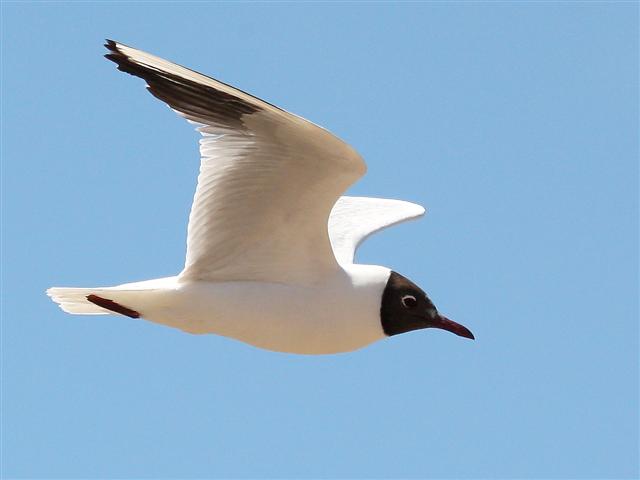
Black-headed Gull. (Chroicocephalus ridibundus)
Distant shot of a male Bearded (Tit) Reedling. (Panurus biarmicus)
Happy family of Mute Swans.
I need more shade Mummy!
Common Tern. (Sterna hirundo)
Barn Swallow (Hirundo rustica) taking a brief rest from catching insects.
No apologies for posting another (Pied) Avocet. (Recurvirostra avosetta)
Painted Lady. (Vanessa cardui) looking a little worn.
After a late lunch [I had a baked tatty with cheese and a mixed salad] in the eco-friendly Information Centre we headed off to to CleySpy in Glandford for some retail therapy. Tony wanted to look for a new harness for his bins but we both ended up buying a new hat to shade us from the sun....or the rain!
Anita and I took a short walk through the model village, built by Sir Alfred Jodrell a century ago, admiring the reddish-pink waves of Valerian; the buildings including the Shell Museum, (regretfully closed)  built using local Norfolk red brick and flint with Flemish gables.We then headed down to the River Glaven, overlooked by the watermill (built in 1907), and then onto the water meadows.....
......where I finally got a chance to capture a resting male Orange Tip (Anthocharis cardamines).....FAB.

Sunday, 27 June 2010

Norfolk Review (Part 2) - Titchwell

No holiday to the North Norfolk coast would be complete without spending some time at Titchwell RSPB Reserve so here are some images from our two seperate visits on day 3 when we met up with our friends Jean and Tony, also on holiday but staying further east near Wells, and day 6 when Anita and I dropped in for a late afternoon stroll. Once again there was a very fresh and breezy north-easterly wind and rain on the radar so we had to wrap up and protect ourselves from the elements in the middle of June! 
The resident friendly Robin very quickly perched on the car wing mirror to see if we had any scaps. My friend Keith at holdingmoments had this chap eating out of his hand earlier this year. As we headed out onto the reserve we had our first sightings of Marsh Harriers quartering over the reed beds plus a Red-Crested Pochard was located on one of the reed fringed pools with Teal, Gadwall, and Tufties.
Plenty of activity overhead with Swifts, Swallows and House Martins. Reed Buntings occasionally perched on the swaying reeds. From the hide Tony and I scoped out the distant ducks and waders including Gadwall, Shoveller, Shelduck, Pochard, Mute Swan, Greylag Geese, Cormorant, Little Egret, Knot, Black-tailed Godwits, Redshank, Greenshank, Ringed Plover, Lapwing, Little Gull, Black-headed Gulls, Lesser Black-backed Gulls, Herring Gulls, Common and Little Terns. Elsewhere we also saw Kestrel, Sparrowhawk, Linnet, Meadow Pipits, Starlings, Wigeon, Grey Heron, Pied Wagtail, Cetti's Warbler (heard only) and fleeting glimpses of a Bearded Tits flying into the reeds.
The main activity alongside the path were young Sedge Warblers perched precariously in the reed bed constantly begging for food from their overworked parents.
As expected there were lots of (Pied) Avocets on the freshwater lagoons. A very windy walk out onto the beach produced Turnstone, Bar-tailed Godwit, Dunlin and Oystercatchers feeding along the tide line. With a rain front approaching and Tony getting hungry it was soon time for us to head back towards the Reserve Centre for much needed refreshments.
As we crossed the boardwalk a pair of Skylarks noisily alighted on the handrail allowing me a few quick shots.
Check out the length of those hind claws!
Another birder stopped us and asked if we were any good with wader ID to which Tony immediately responded by pointing at me.....no pressure I thought!  Through his scope I located the distant objective....larger than a Dunlin; showed large primary projection; a very slight decurved bill and the heavily streaked breastband that is sharply demarcated against the white unmarked underbelly...a PECTORAL Sandpiper. I reported this sighting at the Reserve Centre and was immeditely referred to the resident warden who suggested that it might be the same bird that was recorded at Frampton Marshes on the other side of The Wash and definitely an unusual record for Titchwell in the spring. (Usually only seen during Autumn return migration). Just a pity I couldn't get a photo as the bird didn't stop long after feeding and I think we were the only 3 people to spot this individual. 
The final encounter on our second visit was this Pheasant eagerly waiting for help from the Pigeon to cadge a titbit that may fall out of the feeder.

N.B. If anyone is thinking of visiting Titchwell later this year the path to the sea will be closed from August to October as work on the Coastal Change Project continues...not sure what effect this will have on all the returning migrants and wintering species that use this stretch of important marsh......FAB. 

Wednesday, 23 June 2010

Back from Norfolk and Suffolk.

We are back  from a two week camping trip to windy Norfolk and Suffolk where we saw 111 species and I added Little Gull, Nightjar, Woodcock, Grey Partridge, Golden Oriole (heard only), Stone Curlew, Pectoral Sandpiper plus Pink Flamingo (of unknown origin!) to my 2010 year list which now totals 154. We enjoyed many walks and had a handful of sightings of flying Bitterns and numerous encounters, albeit at some distance, of Marsh Harriers including watching food passes plus Nightingales feeding their newly fledged youngsters. 
To keep things ticking over, while I put together a series of posts of the locations that we visited, here are a few images.   
Pied Wagtail (Motacilla alba)
Pied Avocet (Recurvirostra avosetta)
Black-headed Gull (Chroicoephalus ridibundus).
Apart from Woodpigeons these gulls were the most numerous and noisiest of all the species we saw!
Herring Gull (Larus argentatus)
Working boat leaving Walberswick.
This was my first return visit to this location for many many years so I took a series of shots along the river, including the famous ferry, in the hope my friend Steve in Cape Ann, MA. who has a particular passion for his local waterfront will be interested but he'll have to be patient while I sort through all the images for a future post.
Barnacle Geese (Branta leucopsis).
This shot was taken at Pensthorpe Wildlife Park where breeding has been very sucessful this year. 
Immature Coot (Fulica atra)
Juvenile Starling (Sturus vulgaris)
Ox-eye Daisies enjoying the the sunshine (we did have some!)
After two weeks of neglect and dry weather the garden is in urgent need of attention and I need to get out and about locally but I hope to bring you some more sights from our holiday very soon......FAB. 

LinkWithin

Related Posts with Thumbnails