Showing posts with label Purple Emperor. Show all posts

Saturday, 21 July 2018

Headley Heath Fieldtrip.

Early on Thursday morning I spent a couple of hours wandering across the chalk heath and downland at Headley in the hope of adding a few species to my photo album for this season before joining an pre-planned Butterfly Conservation fieldtrip around this National Trust site.

Not unsurprisingly the most numerous species were the Gatekeeper (above) and Brown Argus (below) frantically nectaring everywhere I trod.


Not initially finding any of my target species I decided to sit awhile at a convenient spot and just soak up the atmosphere and monitor the comings and goings and nearby I spotted a couple of moths.

A Silver-Y and a Common Purple and Gold (Mint Moth).

As the temperature started to rise there was a marked increase in aerial activity and whilst I had seen Dark Green Fritillary at another site earlier this month I had not previously managed to grab any images so finding a female briefly perched was a bonus. I also saw two others, probably males, flying strongly across the hillside.


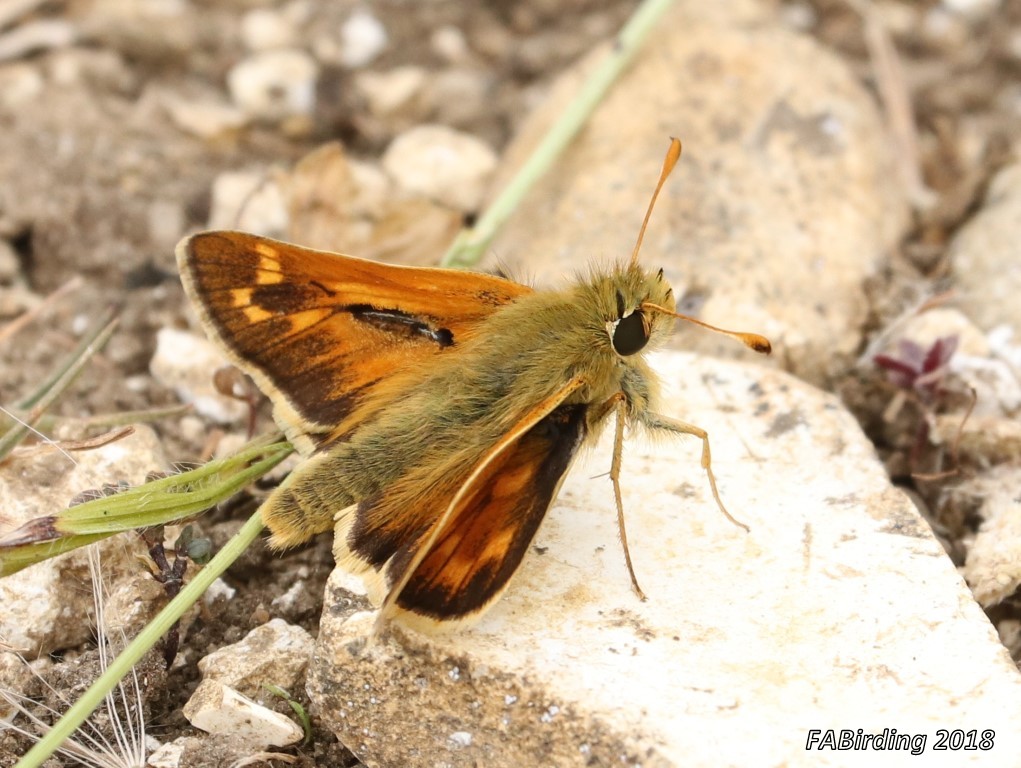
A few minutes later I located the species I was hoping to find, the rare Silver-spotted Skipper (Hesperia comma).

At around midday I was joined by the large group of BC members on this section of open hillside where a few more Silver-spotted were seen.

A male Chalkhill Blue (Lysandra coridon) was another first for me for 2018.

Above are just a few of the other species logged during our walk, including Silver-washed Fritillary, Marbled White, Speckled Wood, Common Blue and Brimstone.

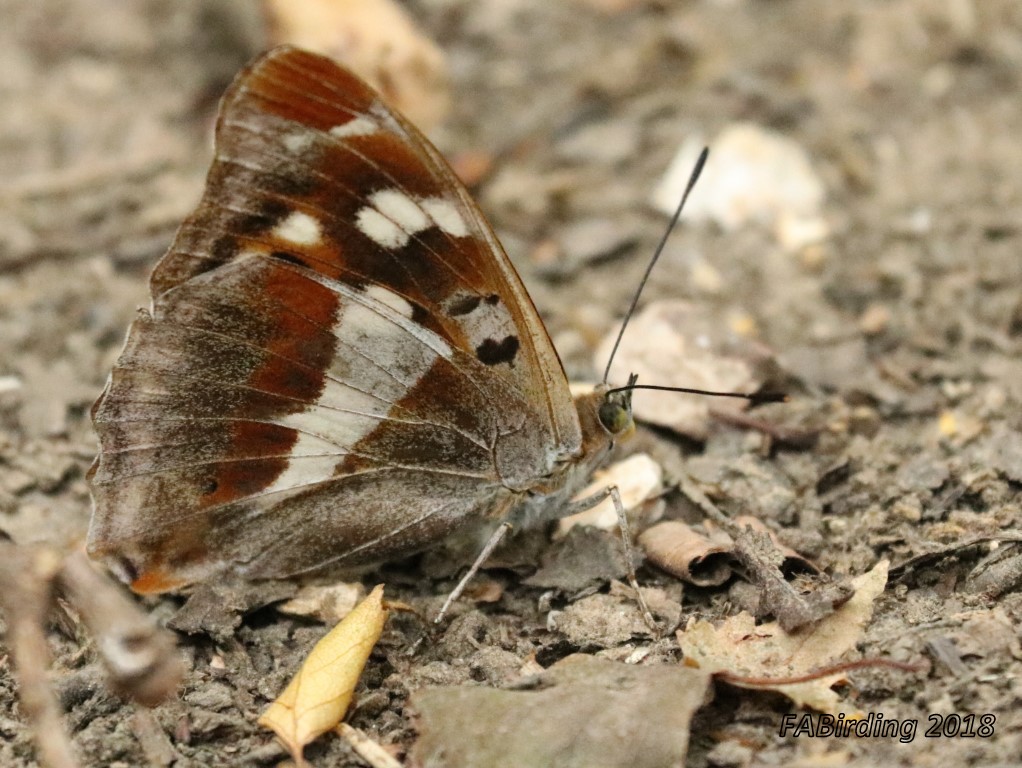
The final new sighting was a very drowsy female Purple Emperor (below) who eventually fluttered high into the nearby woodland

Linking to:

Thursday, 7 July 2016

Butterfly Forays.

A visit at the end of June, albeit on a slightly overcast and windy morning, to Juniper Bottom enabled me to catch up with a few more butterfly species on the chalk downland slopes.

The most obvious flutter on the wing when the sun chose to briefly show itself was the Marbled White (Melanargia galathea ) often stopping to nectar for a few moments on the wild privet.

It is quite common to find Marbled Whites with red parasitic mites clinging to the thorax, head or abdomen. Studies indicate that these mites Trombidium breei are harmless to the butterfly, and have no detectable effect on the flight performance, orientation ability or lifespan. The same species of mite parasitises several other grassland butterflies including Meadow Brown, Gatekeeper, Common Blue, Chalkhill Blue, Adonis Blue and Small Skipper.


The images above and below are the female Marbled White.


After a little searching I finally located a pair mating (see below) deep down in the grasses.

This view shows the distinctive difference between the sexes by comparing the dark peppered patterns on the under wings; a neutral grey colour on the male, while in the female they are a warm grey brown.

Small Skipper(Thymelicus sylvestris).

Small Tortoiseshell (Aglais urticae).

Dark Green Fritillary (Argynnis aglaja).

Today I co-led a walk on Epsom Common where Large Skipper, Large White, Brimstone, Marbled White, Small Tortoiseshell, Comma, Red Admiral, White Admiral, Silver-washed Fritillary, Purple Hairstreak, Speckled Wood, Meadow Brown, and Ringlet were seen. 

 Comma (Polygonia c-album).

However I suspect the star species for most of the 27 participants was the Purple Emperor. Whilst we had two sightings of males flying fairly high during our walk the bonus was a male fluttering around us at head height at the end of the walk. It then decided to rest at our feet for over 45 minutes. Just a pity it didn't open its wings!

Purple Emperor (Apatura iris).

Next Thursday I have agreed to lead a walk on Ashtead Common so providing the weather obliges we should have more sightings of Purple Emperor and I might get the opportunity to grab some images of Purple Hairstreak, White Admiral and Silver-washed Fritillary. FAB.

Linking to:
Saturday's Critters

Saturday, 18 July 2015

Butterfly Foray on Ashtead Common.

On Thursday morning I paid a brief visit to the ponds on Epsom Common where this fresh Holly Blue (Celastrina argiolus) was flitting and briefly resting on the waterside vegetation. Not a great deal of avian activity but I did log Mallard (1), Moorhen (1), Grey Heron (2), Canada Geese (21) plus one Greylag Goose with a few Swallows and Swifts in the air.

An hour later after trudging right across Ashtead Common I joined a Butterfly Conservation walk under a very cloudy sky and with very little to catch our attention as we crossed the main meadow until someone spotted this Painted Lady (Vanessa cardui) hiding deep in the grass.

A slow walk ascending one of the main open rides towards the wooded ridge produced good numbers of Ringlet, Meadow Brown, Gatekeeper, Large and Small Skippers and eventually a few high flying Purple Hairstreak plus our first sightings of Silver-washed Fritillary, White Admiral and Purple Emperor.

After our lunch stop another Painted Lady (above) was spotted and nearby I grabbed a shot (below) of one of many freshly emerged male Gatekeepers (Pyronia tithonus).


A totally unexpected find (below) was this Clouded Border (Lomaspilis marginata), a moth that is commonly found in woodland but is a night time flyer.


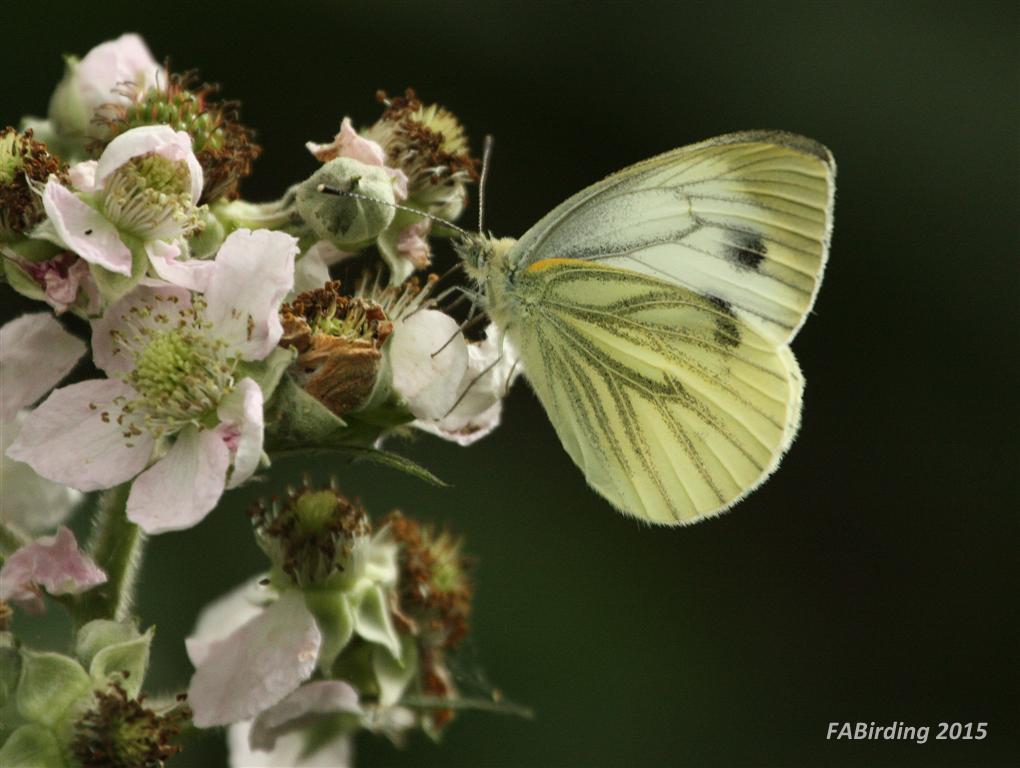
Other butterflies logged during this walk included Comma, Marbled White, Speckled Wood. Holly Blue, Red Admiral and (below) a Green-veined White (Pieris napi).
I was asked to navigate part of the walk along the ridge which took us through several sections of my regular transect and this ultimately provided us all with very close views (below) of a male Purple Emperor (Apatura iris) down on the ground. This was totally unexpected as it was 3 p.m. when you would normally expect to only see this species flying high above a favoured Oak tree. [You can just make out the purple sheen on the left hand wing that clearly distinguishes it from a female]

All in all an interesting walk and with more sunshine promised for later today I'll be hoping for a another decent list when I carry out this week's recording session.  FAB.

Linking to Saturday's Critters hosted by Eileen.

Friday, 10 July 2015

Friday Flutters

My week started on Monday with a wander around the chalk hillside above Juniper Bottom in fairly windy conditions where hundreds of Marble Whites (Melanargia galathea) were flitting hither and thither.

On Tuesday I attended a Butterfly Conservation field trip to Sheepleas; comprising a mosaic of ancient and recent woodland, scrub and open grassland; lying on the chalk slopes of the North Downs. 

A nettle rich field produced good views of many species including Small Tortoiseshell (Aglais urticae). It was interesting to note that many individuals looked a lot smaller than normal.


A sunny glade in the woodland produced our best sightings of Silver-washed Fritillary (Argynnis paphia) with several males perched on umbillifers ...

... followed by a slightly more distant view of a mating pair, with the much darker coloured female above the male.
During this walk I logged 13 species including, after a long wait due to very gusty winds and intermittent showers, a high tree top view of a Purple Emperor.


On Thursday morning I made a brief check of the wildlife around the ponds on my local birding patch at Epsom Common and managed to get my first record shot of a Downy Emerald (Cordulia aenea) perched in the shaded vegetation above the water.


On my way back to the car park to join another Butterfly Conservation walk I recorded my first sighting of a Purple Emperor at this site (see my previous post "A Purple Day"), initially perched with its wings closed on a post before moving onto the ground to seek out some nutrients.


Purple Emperor (Apatura iris).

After everyone spent time enjoying the close views of the Purple Emperor we had a very pleasant two hour stroll around Epsom Common led by Alison Gilry, another transect recorder, enabling me to add Marbled White and Purple Hairstreak to my patch list sightings for this year.

Holly Blue (Celastrina argiolus)

Purple Hairstreak
After a lunch break three other butterfly enthusiasts joined me on my weekly transect walk on nearby Ashtead Common. 

Having those extra pairs of eyes and experience certainly helped with identification including an unexpected further sighting of two male Purple Emperor and a Purple Hairstreak (Neozephyrus quercus) both too far away for the lens so I have inserted a shot of the latter species taken last year.


Once again the transect produced sightings of eleven species; Small Skipper (4), Small/Essex Skipper (3), Large Skipper (3), Large White (1), Purple Hairstreak (2), White Admiral (3), Purple Emperor (2), Comma (2), Silver-washed Fritillary (1), Speckled Wood (2), Marbled White (1), Gatekeeper (5), Meadow Brown (41) and the most numerous was Ringlet (53).  FAB.

Ringlet (Aphantopus hyperantus).

Linking to:
Saturday's Critters hosted by Eileen and  
Nature Notes hosted by Michelle.

Thursday, 9 July 2015

A Purple Day.


At the end of a brief patch walk at Epsom Common Stew Pond this morning (10.15 a.m.) I spotted a large butterfly sunning itself on a sign post upright and had my closest ever views of a male Purple Emperor (Apatura iris). 

A half hour later I was able to share this experience with various other members of  the Surrey and SW London Branch of Butterfly Conservation as we watched one individual (below) extracting nutrients and totally oblivious to the large circle of onlookers.

Later on in the day I had three more sightings of this sometimes elusive species including two males flying above an Oak on my Ashtead Common North butterfly transect ... definitely a purple day.

A roundup of this week's sightings will be posted tomorrow on 'Friday Flutters'.  FAB.

Saturday, 19 July 2014

Butterfly Forays - Purple Emperor and Hairstreak.

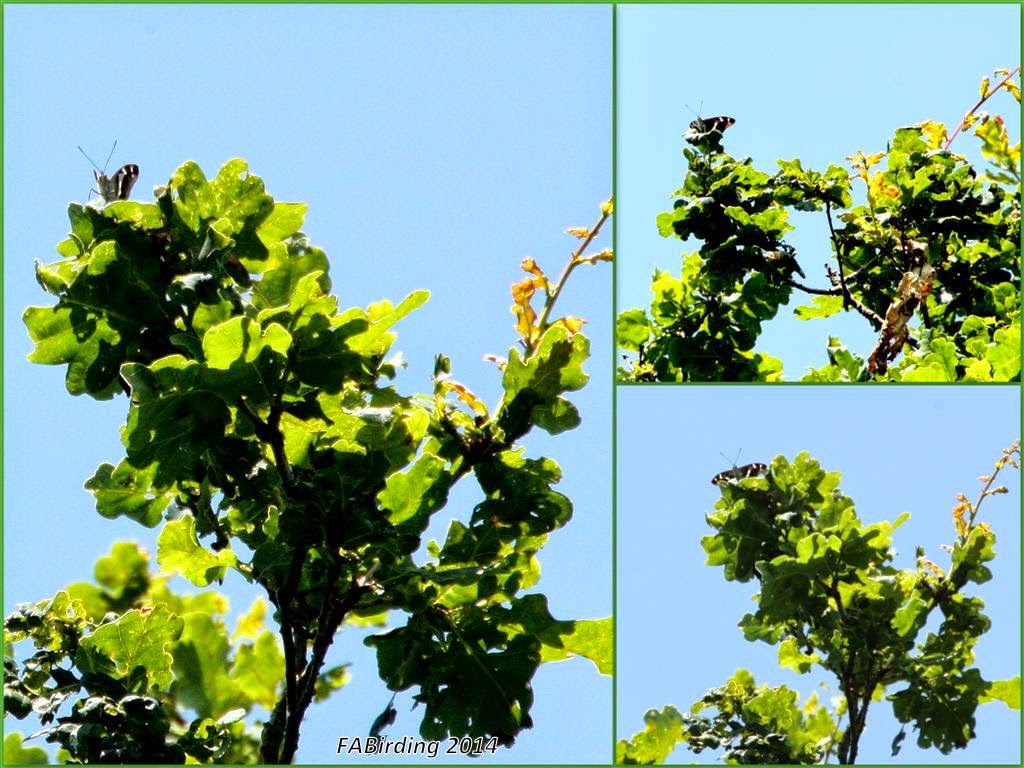
During the past two weeks I have been fortunate to see a total of 7 male Purple Emperor (Apatura iris) during visits to two separate local commons, including one individual flying just twenty feet above my head, but once again the only photo opportunities were males perched extremely high up on their Oak master trees. I am still hopeful that one day I might get one in the frame at a much lower altitude!

Indications from one local site (Ashtead Common) are that there are very good numbers of Purple Emperor on the wing this year so I'll definitely be going back subject to a spell of suitable weather.

For the other species, the small Purple Hairstreak (Neozephyrus quercus) I stumbled across a single individual, probably a female, perched just a foot off the ground on the leaf of a Birch sapling on Bookham Common, and managed just one decent shot of its silvery under-wing (see below) before it disappeared from view.


All images were taken 'handheld' with the 450D and 70-300mm lens.  FAB.

Monday, 22 July 2013

Admirals, Fritillary and a rare Emperor.

During a recent visit to Bookham Common I finally managed to grab some images of several butterfly species that can be found in sunlit woodland glades although the numbers on the wing are definitely much lower than this time last year.

 Red Admiral (Vanessa atalanta)

 White Admiral (Limenitis camilla)
Although traditionally found in broadleaved woodlands this elegant species is very tolerant of the shade which has helped its expansion into mixed conifer and deciduous plantations.
It has a powerful gliding flight and I had to wait a long time for one to come to rest in the sunshine.

Like many species the under wing pattern and colours are totally different but they never wanted to pose in quite the right place for a clear shot!

 Silver-washed Fritillary [male] (Argynnis paphia)

The males, distinguished by the four bold sex brands along the veins of their forewings, were very active chasing one another hither and thither, while trying to hunt down a receptive female.

Silver-washed Fritillary [female] (Argynnis paphia)


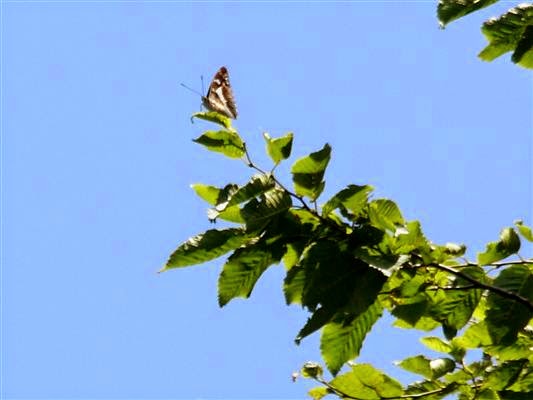
However the highlight of my visit came around midday when I joined two other wildlife watchers and witnessed a number of 'dog fights' between two male Purple Emperors high above the master oak. Whilst I found it too difficult with my limited lens to capture this fascinating activity I did manage to snap a record shot (heavily cropped) of one male perched on the very tip of one of the highest branches.
Purple Emperor (Apatura iris)

LinkWithin

Related Posts with Thumbnails