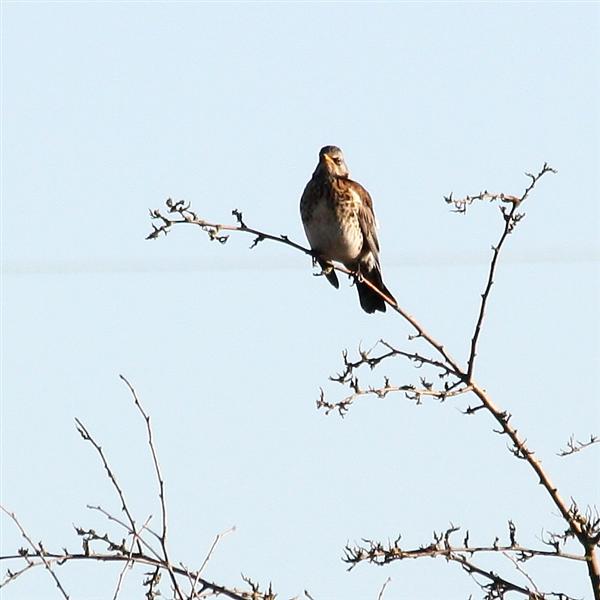
After a gap of around 20 years and prompted by images posted on Mike's blog I recently decided it was time I made a return visit to Warnham Local Nature Reserve situated on the outskirts of Horsham in West Sussex. (You can click these links for more information and of course view Mike's superb wildlife images.)

 |
| Dunnock (Prunella modularis) |
By way of background this 92 acre site, comprises a 17 acre millpond (which was originally created as part of the Sussex iron working industry), marshland, reedbeds, grassland and mixed woodland so an abundance of flora and fauna can be seen throughout the seasons. There are 3 hides, plus boardwalks through the wetland areas leading to the woodland walks with various 'birdie' signs to indicate good photo or wildlife watching points around the site.
I started by spending a while in the Tern Hide watching the distant Grey Herons and a small variety of ducks, Greylag and Canada Geese while an obliging Dunnock perched outside.
As many of my readers will know most of my birding is carried out in locations that do not have bird hides so it was a different experience for me to sit and wait to see what might come in range of my small lens.
The Woodpecker Hide overlooks an area littered with various feeding stations and perches so I waited in anticipation and it wasn't long before a Lesser Redpoll perched briefly on a distant feeder but it was to get much better ......


This next shot of a male Chaffinch revealed that this individual
had warty growths on both legs and feet.
These growths may vary in size from small nodules to larger warts that engulf the whole leg. The warty growths (Fringilla papillomavirus) aparently develop slowly over a long period and affected individuals, like this one, may otherwise appear quite healthy. Some individuals, of course, may become lame or lose the affected digits.
Finally, two common garden species that I don't often get the opportunity to get such close up views ...............
I'm not sure who this tiny fellow had its eyes on .... could it be me?
Of course these weren't the only species seen so I have saved a few more images for a follow up post. FAB.
I started by spending a while in the Tern Hide watching the distant Grey Herons and a small variety of ducks, Greylag and Canada Geese while an obliging Dunnock perched outside.
 |
| Lesser Redpoll (Carduelis cabaret) |
As many of my readers will know most of my birding is carried out in locations that do not have bird hides so it was a different experience for me to sit and wait to see what might come in range of my small lens.
The Woodpecker Hide overlooks an area littered with various feeding stations and perches so I waited in anticipation and it wasn't long before a Lesser Redpoll perched briefly on a distant feeder but it was to get much better ......

A closer view of a male Goldfinch (Carduelis carduelis).

Then two for the price of one ... a Goldfinch and the Lesser Redpoll.
 |
| Chaffinch (Fringilla coelebs) |
These growths may vary in size from small nodules to larger warts that engulf the whole leg. The warty growths (Fringilla papillomavirus) aparently develop slowly over a long period and affected individuals, like this one, may otherwise appear quite healthy. Some individuals, of course, may become lame or lose the affected digits.
Finally, two common garden species that I don't often get the opportunity to get such close up views ...............
 |
| Great Tit (Parus major) |
 |
| Blue Tit (Cyanites caeruleus) |
Of course these weren't the only species seen so I have saved a few more images for a follow up post. FAB.
For more images from around the globe ... check out WORLD BIRD WEDNESDAY.