Showing posts with label Black-tailed Skimmer. Show all posts

Tuesday, 31 July 2018

There be Dragons here.


Many of my readers will know of my regular visits, throughout the seasons, to the acidic heathland, bog, ponds and woodlands at Thursley Common National Nature Reserve  for its wealth of wildlife, notably its special birds and a habitat that also supports over 20 species of Odonata.

A carved sign alongside the boardwalk depicts some of the delights that can be found here and this post serves to illustrate the dragon species I have seen here during the past month.

Four-spotted Chaser (Libellula quadrimaculata).

Four-spotted Chaser (Above and below)


Black-tailed Skimmer (Orthetrum cancellatum) [Male above - Female below]


Keeled Skimmer (Orthetrum coerulescens) [Male above - Female below]


Keeled Skimmer - Mating pair.

Common Darter (Sympetrum striolatum) [Male above - Female below]
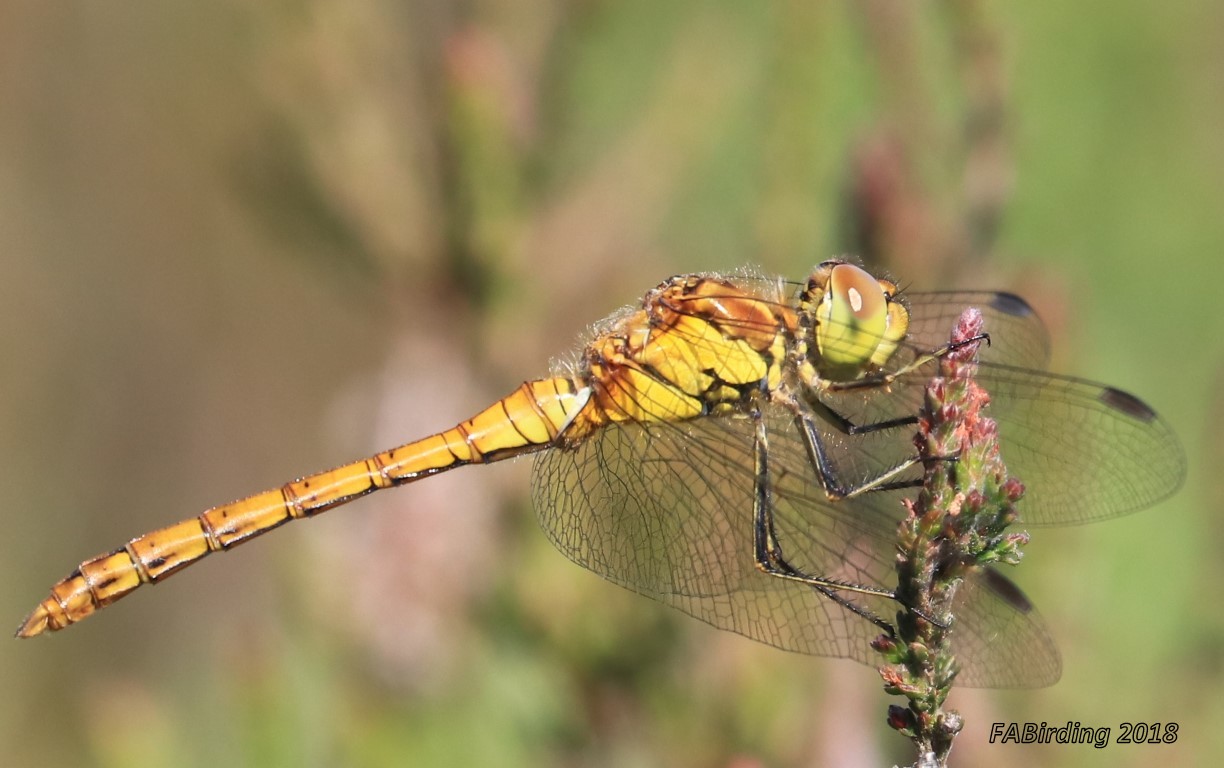


Black Darter (Sympetrum danae) [Male above - Female below]


The Damsels will feature in a future post.

Saturday, 25 June 2016

Ashtead Common Transect.

After the torrential storms on Thursday which flooded our rear garden I anticipated that even beneath a partially sunny sky late on Friday morning the underfoot conditions for my planned butterfly transect walk at Ashtead Common would require waterproof footwear. All the ditches were brimming full of water that was still seeping off the hillside and the main rides were very boggy so the Muck Boots were definitely the right choice.

The dominant species recorded was Meadow Brown (17) plus Speckled Wood (2), Large Skipper (5) and a single Red Admiral. As expected, due to the weather conditions, the overall numbers for the last 13 weeks of the survey period are down by at least 15% compared to last year.

Fortunately during my walk there were a few other interesting encounters mainly centered around the very muddy Flag Pond including more sightings of several male White-legged Damselflies, an Emperor dragonfly ovipositing, two male and one female Broad-bodied Chaser plus Blue and Large Red Damselflies.

 A female Large Red Damselfly (Phrrhosoma nymphula).


The largest open woodland pasture now has a few clumps of foxgloves but is quickly being dominated by the overbearing bracken but the time I spent here produced a few day flying moth species.


Brown Silver-line (Petrophora chlorosata).


One of the varied number of micro Grass Moths (Crambidae family).


I also disturbed at least half a dozen Silver Y (Autographa gamma) but getting a clear focus deep within their grassy hideaway was a real challenge!

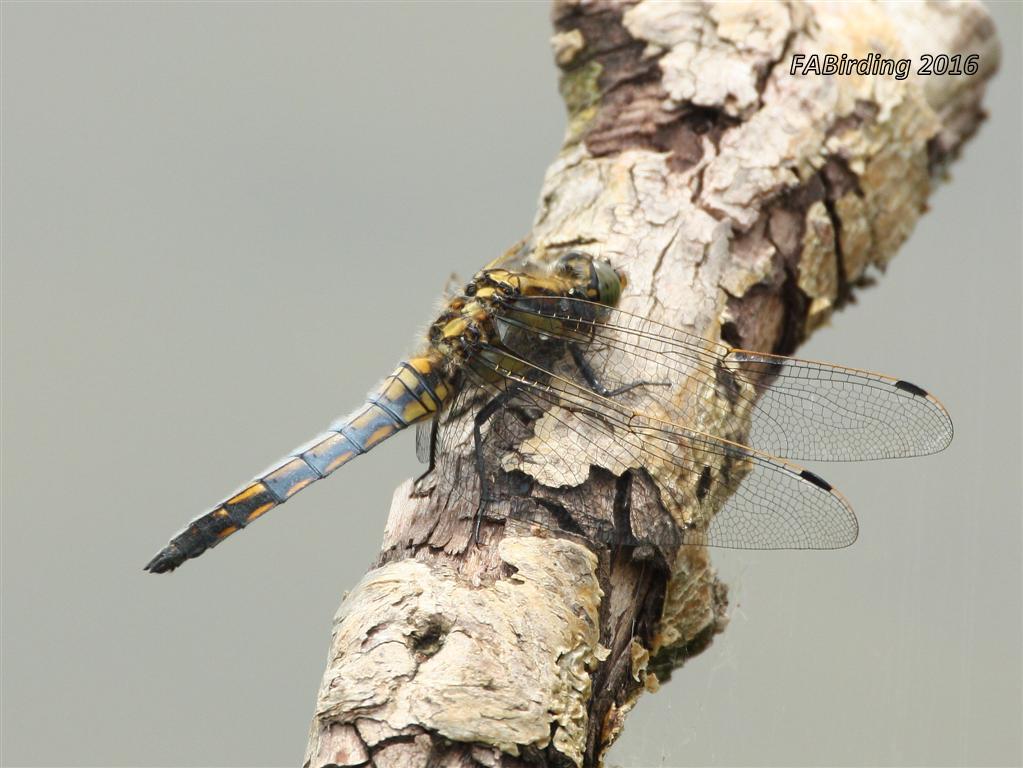
The most unexpected find was this immature Black-tailed Skimmer (above) probably displaced by the windy weather. Below is just one of the five Large Skipper recorded throughout the transect.

Friday, 17 June 2016

Black-tailed Skimmer.


One dragonfly species that characteristically perches horizontally on exposed locations close to its territory is the  Black-tailed Skimmer (Orthetrum cancellatum).


All these images were taken during a walk around the ponds in Bushy Park and shot 'hand-held' with the 70-300mm lens plus 1.4x converter and then cropped.


Below is the only image I managed to grab of a teneral / immature (possibly a female) with its soft reflective wings.

Linking to:
Saturday's Critters
Macro Monday 2
Nature Notes

Tuesday, 21 July 2015

Black-tailed Skimmer.

After all the recent posts about butterflies I thought it was time for a change of emphasis. So from a visit to Bushy Park in mid June a few shots of the Black-tailed Skimmer (Orthetrum cancellatum).

A fast, low flying species that it highly active but males holding a territory often return to the same perch in order to watch out for other interloping males and for any female returning to an oviposition site.


The females spend most of their time away from water so the males have to act very fast and copulation often only lasts 20-30 seconds, sometimes without even alighting within the male's territory. I watched this pair [female is on the left] flying together for at least 5 minutes before landing well away from the water to continue the mating process.


Saturday, 28 June 2014

Dragon meets Spider.


Whilst on a recent hunt for butterflies I came across this female Black-tailed Skimmer (Orthetrum cancellatum). The dark brown/black pterostigma distinguishes this species from the Keeled Skimmer.

The image above clearly illustrates the flexibility of the trailing edge of the wing where the veins become much thinner thus enabling the wing to twist and adapt its shape to aerodynamic forces.

When I re-found this dragon I was so engrossed in focusing on her that I didn't realise until I reviewed the image that it had perched right next to a web and the Spider carrying its egg sack was on the other part of the bent stem! The dragon eventually flew away leaving the Spider to wait for more appropriate prey.

As usual all the shots were taken hand-held with the 450D and 70-300 lens.

Linking to Camera Critters and Saturday's Critters.

Have a good wildlife watching weekend, wherever you are.   FAB.

Monday, 9 July 2012

Thursley Common.


After my recent morning session with the Silver-washed Fritillary's at Bookham Common I decided to head over to the acid lowland heath at Thursley Common and did a circuit of the boardwalk to check out the wildlife.
Avian activity around midday was very quiet apart from a distant perched Stonechat plus Mallard with chicks and a pair of Tufted Ducks on the pools.

 While searching the water I located an Emperor Dragonfly ovipositing amongst the vegetation.

Due to the warmer conditions a few of species were taking advantage of the boardwalk to rest and soak up some limited sunshine including a large number of Common Blue Damselflies .....

 .... and numerous male Black-tailed Skimmers (Orthetrum cancellatum). It is easy to get these confused with a Keeled Skimmer (see below) but the Black-tailed has a dark brown-black pterostigma.

I only managed to find one male Keeled Skimmer (Orthetrum coerulescens) perched above the water. Distinguished from the Black-tailed by the totally blue abdomen; the parallel light markings behind the head plus the obvious yellow pterostigma.

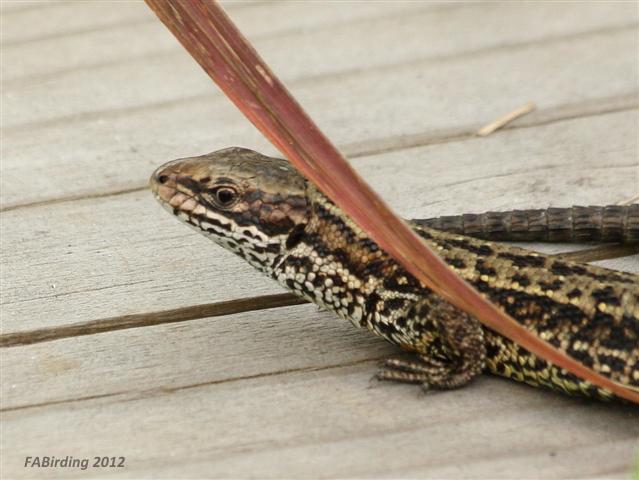
Numerous Common Lizards were also basking on the boardwalk and I'm always intrigued to see how close I can get by slowly creeping towards them before they scurry away into hiding.


Other sightings included Four-spotted Chasers, Blue-tailed Damsels, Great-spotted Woodpecker, a single Swallow, a few high flying Swifts and a pair of Hobbys made a brief foray over the pools.   FAB.

Saturday, 14 August 2010

Treading the heathland again.

Just over a week ago I made another visit to Thursley Common, an area of lowland heath, and although conditions were not ideal, with overcast skies and a constant stiff breeze (so what's new), I tramped around for a few hours at my usual casual pace.
Keeled Skimmer resting on the boardwalk.
The main boardwalk out to Pine Island was being repaired by the warden and helpers so after a search for any other dragons I headed off in a different direction and went diagonally across the the heathland where the other boardwalk, usually under water in winter, is also looking a bit worse for wear. It was very quiet apart from the occasional calls from Stonechats and a brief distant sighting of a hawking Hobby.
Views around the reserve.
(Clockwise from top left - Gatekeeper, Grayling. Silver Y Moth (I think!) and Black Darter.
The Black Darter and the Grayling were nice finds and I'll post some other images in future posts. Hearing the sound of a woodie tapping away for a meal high in the pines I wondered if it would hang around long enough for a photocall......happily he did.
Great Spotted Woodpecker (Dendrocopus major)
The forecast for the days ahead is not brilliant but I'm hoping at some stage to get to the coast and find something different to post.  FAB.

LinkWithin

Related Posts with Thumbnails