Showing posts with label Small Heath. Show all posts

Wednesday, 13 June 2018

Transect Update - Week 11.


The first two weeks of June are known as the 'June Gap' when spring butterfly species are going over and before the main summer fliers emerge.

I carried out my 'Week 11' transect walk on Ashtead Common last Sunday and was therefore not surprised that a Brimstone failed to appear but recorded 12 Speckled Wood, the highest weekly count for this species this season so far. 


Three of only four other species logged were all new sightings for this season.

A female Large Skipper.

One of nine Meadow Brown.

White Admiral. Just three individuals logged.

White Admiral (Underwing pattern)

A few days later during a stroll on Epsom Common I spotted at least a dozen White Admirals in the space of 30 minutes and also photographed my first Small Heath (below) for the year.


Thursday, 25 May 2017

Northern Greece - Butterflies.

Throughout our seven day birding holiday in Greek Macedonia our group recorded sightings of 34 species of butterflies plus a few moths and various other insects. I certainly didn't see them all but many of those I did see were lifers.

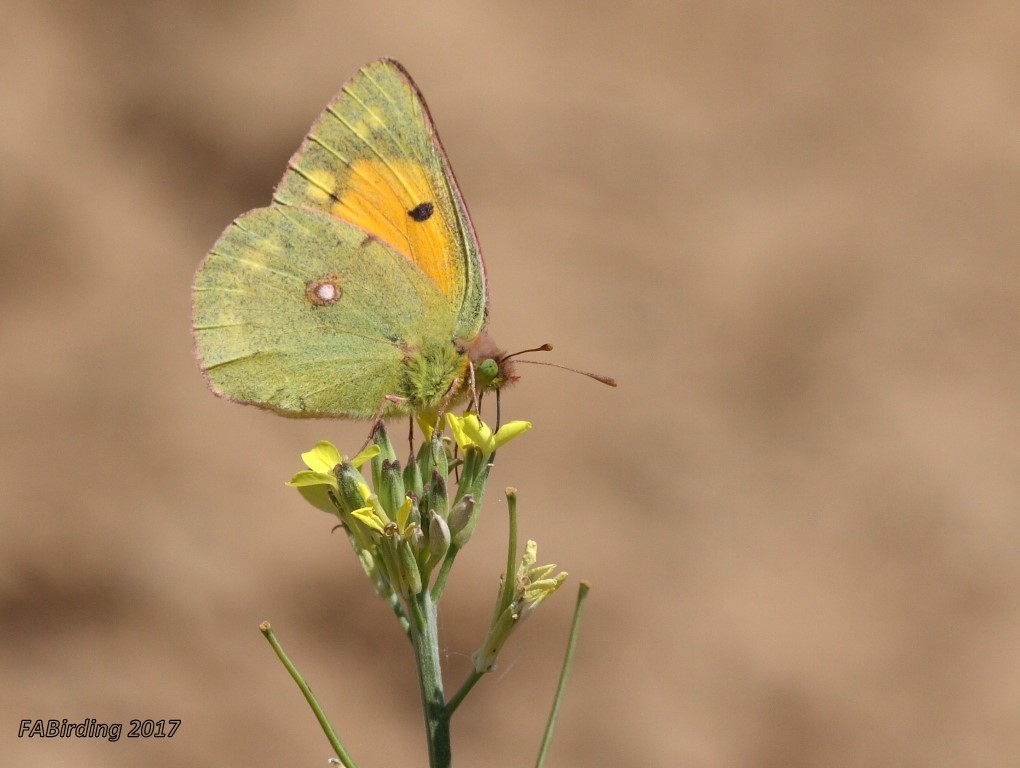
Clouded Yellow (Colias crocea). Photographed during a drive along the eastern embankment of Lake Kerniki.

Lesser Spotted Fritillary (Melitaea trivia) was the most common species seen throughout our trip.


Queen of Spain Fritillary (Issoria lathonia) [above] with its distinctive under-wing pattern of large pearly-silver spots photographed in the Strimonas valley.


A number of 'blue' species where seen but the rare Iolas Blue (Iolana iolas) [above left] that is so much larger than the Common Blue [above right] was a special treat as this upland species often roams several kilometers rarely stopping long in one place.


I saw Eastern Festoon (Zerynthia cerisyi) flying close to some dried out Carp ponds near Vironia on day two and finally grabbed a shot of this faded individual on a revisit to this area two days later.

A very tatty Scarce Swallowtail (Iphiclides podalirius).


This Eastern Wood White (Leptidea duponcheli) was seen along a track on the slopes of Mount Vrondous.


Eastern Bath White (Pontia edusa). One of the most frequently seen white species during our holiday.


One species that has been extinct in the UK since the 1920's is the striking Black-veined White (Aporia crataegi). The male [above] and female with an  attendant Transparent Burnet [below] were seen at various localities. A strong flyer that didn't appear to rest anywhere until these individuals were spotted nectaring on two separate cooler mornings at totally different altitudes.


Other species photographed [clockwise from top left below] were Small Heath, Duke of Bergundy, Sooty Copper and Lattice Brown.


Friday, 27 May 2016

Friday Flutters.


My butterfly transect walk earlier this week through the woodland glades on Ashtead Common only produced two species; Brimstone and Speckled Wood (see image left) plus views of several Speckled Yellow, a day flying moth patrolling the open tracks; so on Thursday I decided to wander the southern chalk downland slope at Denbies Hillside.


Before tackling the downward slope I wandered across the upper meadow; the track-way lined with buttercups; and spotted numerous Five-spot Burnet moths amongst the grasses.

Five-spot Burnet.

A mating pair.


Descending the slope towards the gate provided my first view this year of a Common Blue perched low down in the grassy sword keeping out of the north-easterly breeze.

A few Brimstone and a solitary Orange-tip were also seen patrolling the field edge.


I was also delighted to see decent numbers of our commonest grassland species, the tiny Small Heath, which from past experience rarely perch for very long but I found one individual that sat just long enough for the lens to focus on it.


Small Heath.

My peripheral vision locked onto another inconspicuous and well camouflaged species, a Green Hairstreak, also hiding deep in the hillside vegetation. 

Green Hairstreak.

Deciding to take a rest and eat my packed lunch close to a bare patch of chalk was a good choice as I was shortly able to enjoy decent views of a fresh male Adonis Blue.

Adonis Blue (male).


On reaching the bottom of the slope I eventually came across a female Adonis Blue (see below).

Adonis Blue (female).

Finally a shot of the hillside resident that is a very important grazing species on the downs, necessary for creating very fine, short turf that is required by the rare Adonis Blue and other downland species.


Linking to:
Saturday's Critters

Thursday, 13 August 2015

Friday Flutters - Weekly Update.


Despite the lack of sunshine over recent days the collage above proves there are still a few colourful butterflies to be found around my local birding patch, providing some photo opportunities, in lieu of the avian species that are all still hiding from my lens.

First up was a single Small Copper (Lycaena phlaeas) that alighted briefly beneath my feet before moving onto another leaf and then promptly closing its wings!

A few male Common Blue (Polyommatus icarus) were obvious as they flitted hither and thither before disappearing deep into the grasses to rest briefly before their next territorial foray.


I saw a few Meadow Browns but as expected the Gatekeepers (Pyronia tithonus) were far more numerous but not very active under a cloudy sky. The undersides of both sexes are very similar but this one opened its wings (below) to reveal a female.

A very fresh Red Admiral (Vanessa atalanta) landed on a old tree stump and provided a different splash of colour.


As I walked over the upper grassy meadow a couple of male Small Heath (Coenonympha pamphilus) were chasing one another and this was one of the few occasions I have managed to get a shot as this tiny flutter that is so well camouflaged when it settles deep amoungst the grasses.

The star find of the week was a resting Painted Lady (Vanessa cardui), a migrant species that visits our shores from North Africa. Interestingly I photographed this individual within 50 yards of a single sighting I recorded here during August last year.

With the present unsettled weather pattern it might be a while before I get some more photo opportunities.

Friday, 19 June 2015

Old Lodge Nature Reserve.

Following on from a previous post 'Obliging Redstart', for which I thank everyone for their appreciative comments, as promised I'm returning to Old Lodge Nature Reserve with a few other images taken during my late morning stroll around this heathland location in East Sussex including a few gates and fences. (Linking to Good Fences hosted by TexWisGirl). 

The first avian species seen was a Common Redstart that flew from the pathway in front of me and disappeared into the nearby woodland. 

Some time later I had a much closer encounter and you can view some of those images in my earlier post and on FABirding.

Tree Pipits were also very vocal but unfortunately failed to come within range of my lens. A Cuckoo was also heard calling but not seen.

I saw several species of Moths but only one settled long enough ... a very tatty Common Heath. (Thanks to Dave for the ID correction).


The view beyond the fence line gives an indication of the terrain ... a fairly deep sided valley. I enjoyed the downward journey but didn't relish the steep climb up the other side!


Despite the warmer temperature there were very few butterflies seen apart from Speckled Wood, a couple of Brimstone and this Small Heath that was very flighty.  


On the downward slope I located a small patch of Common Spotted Orchids.


Another heathland specialist is the Stonechat, often spotted on a high perch, and I also watched one pair feeding youngsters hiding in a stand of gorse.


And finally (no apologies) for another shot of the Common Redstart that was definitely the star species during this visit.


LinkWithin

Related Posts with Thumbnails