Showing posts with label Butterfly. Show all posts

Tuesday, 7 August 2018

Transect Update - Weeks 18 and 19.


On my last two weekly walks I thought the conditions were ideal for butterflies, with temperatures in the mid 20's and plenty of sunshine, but only 10 separate species were logged and in very low numbers. However the photo opportunities for several species; all seen in Section 4, a large open glade; made up for the lack of overall activity.
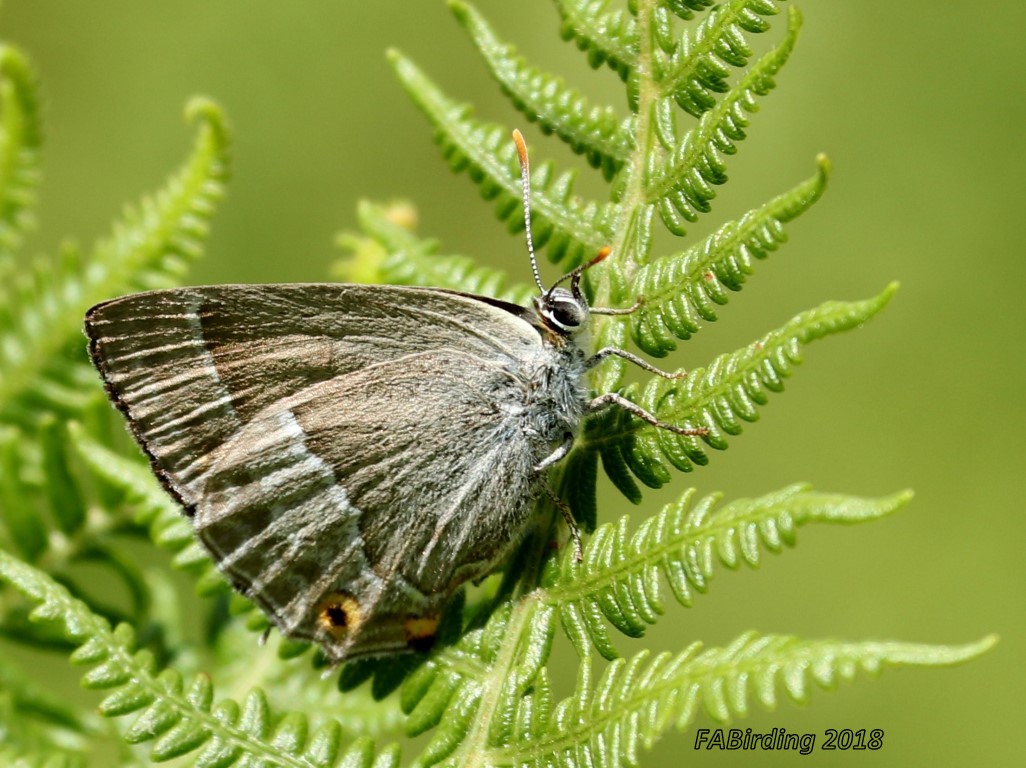
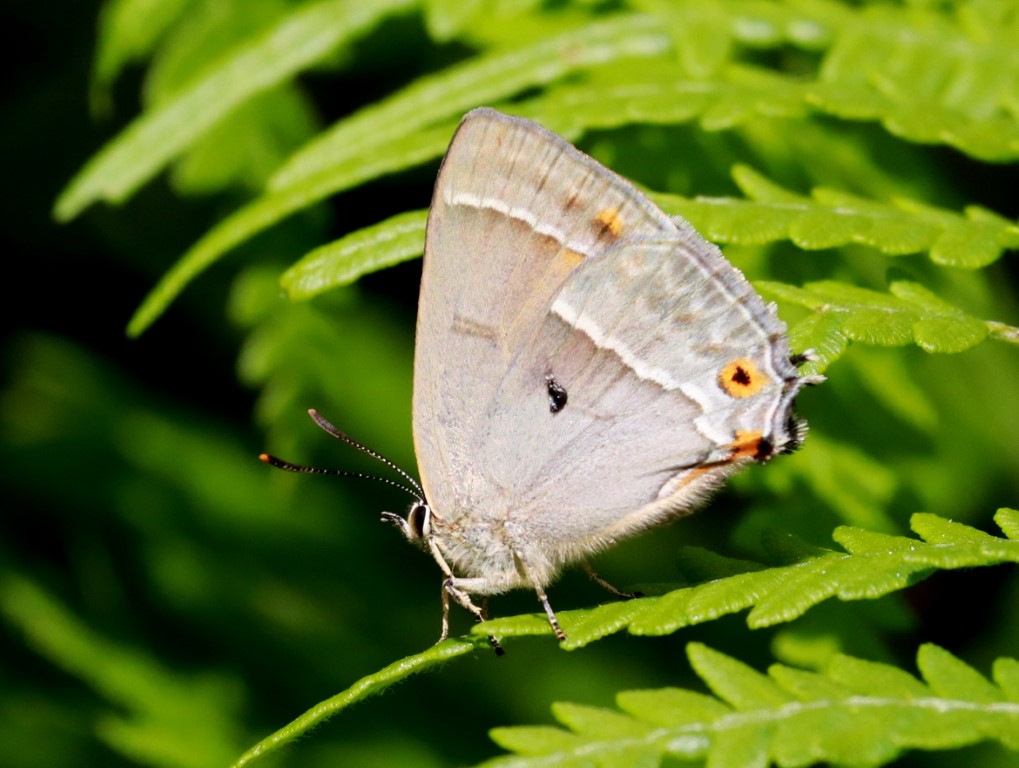
One of seven Purple Hairstreaks recorded over the last two weeks and brings this seasons total up to 96 individual sightings for this species..


The highest tally of just 10 for an individual species was the diminutive Brown Argus


Flying in the same area as the Brown Argus were several male Common Blues, the first of two new species recorded on the transect since I started in 2015, but I only managed an underwing shot (below).


The second new sighting was the Small Copper (below) with 5 individuals counted over the last two weeks.

This little flutter definitely thrives in hot, sunny conditions. In good years three or even four broods might be produced but if the summer weather turns cool and wet the populations crash and can take several years to recover.


Linking to:
Nature Notes.

Friday, 27 July 2018

Transect Update - Weeks 16 and 17.


The temperatures during my Week 16 and 17 transect walks varied between 24 and 28 deg.C definitely the hottest and most humid so far this season with the total number of sightings dropping slightly in the higher temperature last week.

Gatekeepers continued to be the highest recorded species over the last two weeks.

Gatekeeper


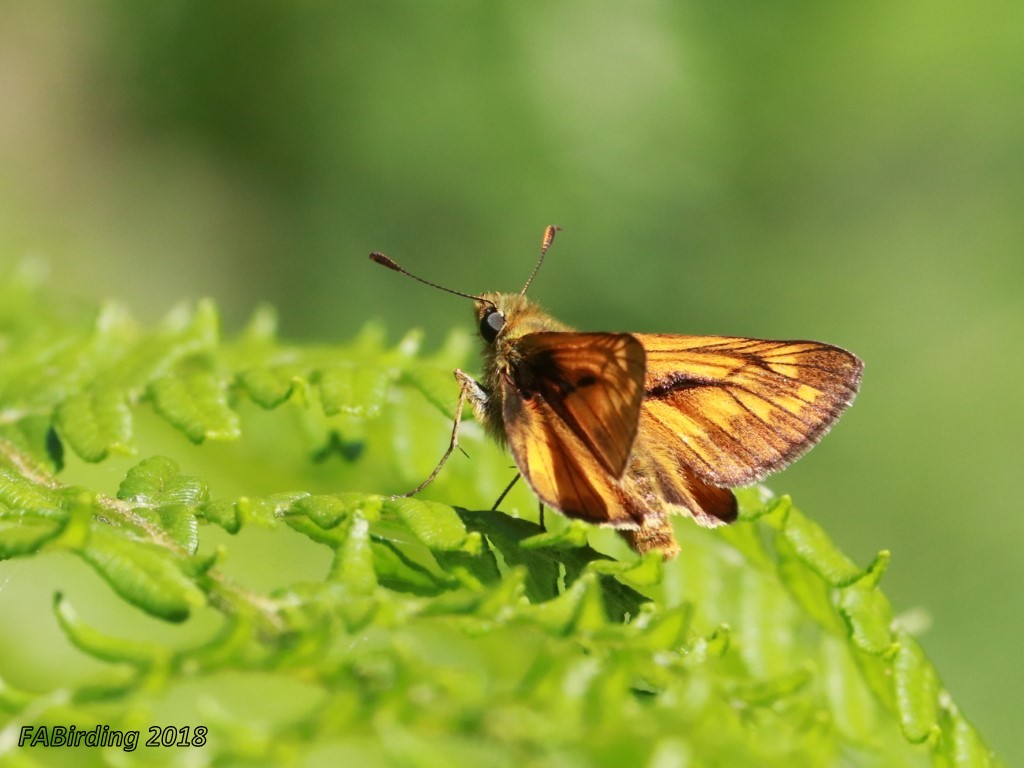
Sightings of all the three Skipper species recorded on the transect has shown a downward trend for the last three years. The reasons could be weather related at the larval stage; the timing when the grass rides are mown plus the ever increasing spread of bracken outcompeting the grasses.

Essex Skipper
Although the number of Meadow Brown and Ringlet logged during weeks 16 and 17 have fallen they continue to be the top two annual recorded species for this transect.

Ringlet
Perhaps not unexpectedly for this oak woodland site the one species that has done exceptionally well this year is the Purple Hairstreak. On the 21 July I recorded 26 and last week I logged 43 with many other sightings away from the transect.

Purple Hairstreak


Just one Marbled White seen again in Section 4 last week.

Marbled White

Two other species that has definitely caught my eye this season are the diminutive Brown Argus with nine individuals recorded last week plus six Common Blue.

Common Blue - Female (left) Male (right)

Brown Argus

Over the last 17 weeks I have now recorded 1024 separate sightings of 21 species. This total to date far exceeds any of the previous three years annual counts BUT this does not infer that some of these flutters are doing well just that the recent lengthy period of warmer conditions has brought them out of hiding and made it easier to find and count them.
Linking to:

Saturday, 21 July 2018

Headley Heath Fieldtrip.

Early on Thursday morning I spent a couple of hours wandering across the chalk heath and downland at Headley in the hope of adding a few species to my photo album for this season before joining an pre-planned Butterfly Conservation fieldtrip around this National Trust site.

Not unsurprisingly the most numerous species were the Gatekeeper (above) and Brown Argus (below) frantically nectaring everywhere I trod.


Not initially finding any of my target species I decided to sit awhile at a convenient spot and just soak up the atmosphere and monitor the comings and goings and nearby I spotted a couple of moths.

A Silver-Y and a Common Purple and Gold (Mint Moth).

As the temperature started to rise there was a marked increase in aerial activity and whilst I had seen Dark Green Fritillary at another site earlier this month I had not previously managed to grab any images so finding a female briefly perched was a bonus. I also saw two others, probably males, flying strongly across the hillside.


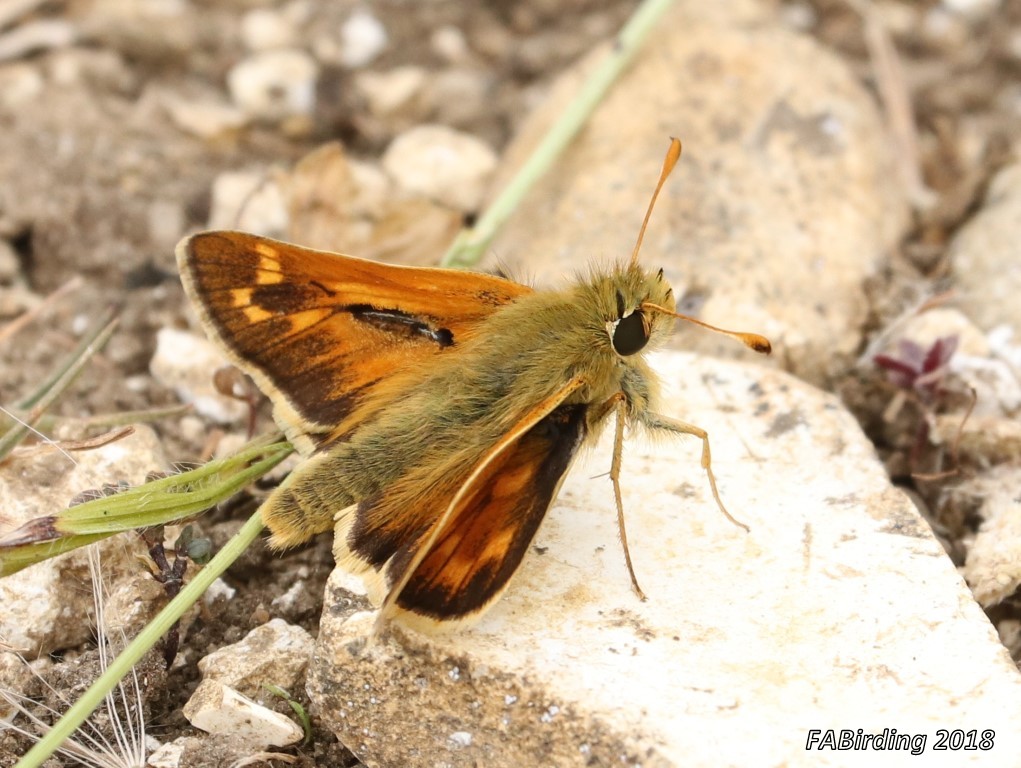
A few minutes later I located the species I was hoping to find, the rare Silver-spotted Skipper (Hesperia comma).

At around midday I was joined by the large group of BC members on this section of open hillside where a few more Silver-spotted were seen.

A male Chalkhill Blue (Lysandra coridon) was another first for me for 2018.

Above are just a few of the other species logged during our walk, including Silver-washed Fritillary, Marbled White, Speckled Wood, Common Blue and Brimstone.

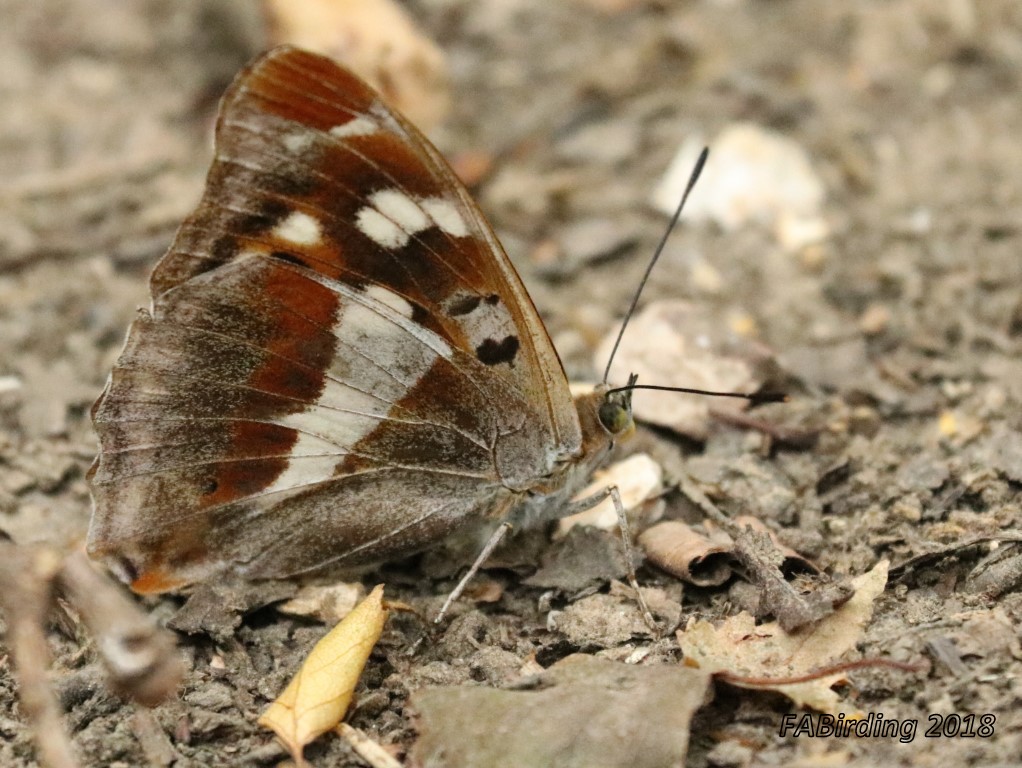
The final new sighting was a very drowsy female Purple Emperor (below) who eventually fluttered high into the nearby woodland


Linking to:

Sunday, 15 July 2018

Small Tortoiseshell.

Over the last four years my transect walks through the woodland glades on Ashtead Common have produced sightings of 24 different species BUT one butterfly that I have so far failed to record is the Small Tortoiseshell (Aglais urticae).

Fortunately I had the opportunity to photograph one individual during a visit to Clandon Wood Burial Reserve at the end of June.


It spent ages with its wings closed so I had to be patient and wait for those fabulous colours to reappear.


Saturday, 14 July 2018

Transect Update for Weeks 14 and 15.

My butterfly transect walk for week 14 was undertaken with temperatures around 25 deg.C and just before a short camping holiday in Kent when it soared well above 30 deg.C. On my walk last Monday (Week 15) the temperature was a more comfortable 23 deg.C.

Week 14 produced the highest count of 11 Large Skipper (above) so far this year.


Whilst I logged sightings of 9 Small/Essex Skippers I was only able to clearly identify 4 individuals as Essex Skippers (above).

As expected the most prominent species seen were Ringlets (above) with a total of 171 recorded over the two visits and Week 15 saw the emergence of the Gatekeepers (below). 


I recorded Large, Small and Green-veined Whites on both walks with the former producing 14 sightings and was also the only species that stopped long enough to be captured by the lens.

Large White.

I also recorded my highest count of 26 Purple Hairstreaks in Week 14 and the highest overall annual total so far of 39 easily exceeding any of the previous three years records. The White Admiral tally for this season stands at 40 to date and is double the sightings recorded over the last four years, 


Conversely sightings of Silver-washed Fritillary has so far been much lower than last year.

Three new species for this season were seen in the last two weeks:

Holly Blue.

Peacock.

A female Brown Argus. This is only the second time in four years that I have recorded this species on the transect.

Linking to:

Friday, 29 June 2018

Transect Update - Week 13.

Once again I chose Sunday 24th to undertake my 'Week 13' transect walk on Ashtead Common under a cloudless sky and a temperature of around 24 deg. C so I was thankful for the overhead green canopy providing some respite from the sun.

On the quarter mile walk to the start of the transect I always stop at a sunny open spot where there is an area of brambles and this often provides an indication of what I may record on the actual transect.


On this occasion there were several Meadow Browns, Ringlet, Large Skippers and a single Marbled White (left) made a brief nectar stop. Unfortunately no Marbled Whites turned up during my timed walk. 

One of the resident Common Buzzards made a fly past as I started my timed walk.


Section 1 produced three new species for this year. First was the Ringlet (above) and ultimately I saw them in all 8 sections recording a total of 58 individuals. Next was a single Purple Hairstreak flying up through one of the oaks.

At the beginning of Section 3 I found another Purple Hairstreak settled on the bracken and when it turned around I noticed a black addition (see below) to the centre of its underwing. I am guessing this may be some form of tick that has attached itself. Sections 4 and 8 also produced single sightings of this species.


The third new addition seen in Sections 1 and 3 was the Silver-washed Fritillary and I logged a total of just four males with only one stopping long enough for a photo call.

As expected the most prominent species was the Meadow Brown again recorded in all sections of the transect with a total of 73 logged.

White Admiral (above) turned up in 5 out of 8 sections with a total of 10 recorded during my walk. With a cumulative count of 27 individuals on my last two walks makes 2018 the best year for this species.

Finally the walk produced sightings of 10 species including Small/Essex Skippers, Large Skipper, Large White and Green-veined White with an overall total of 166 individual butterflies recorded.

Friday, 22 June 2018

Transect Update - Week 12.


When I commence my weekly transect there is always a feeling of hope and anticipation about the species that might be seen. Having previously reviewed last years sightings and numbers plus reasonable weather conditions; 20 deg. C but a little cooler in the shade with some cloud cover being pushed along by a fairly brisk westerly wind; there was the prospect of a decent recording session. 

Section 1 produced 5 different species starting with this Large Skipper (above) plus Speckled Wood (2), Meadow Brown (3), Ringlet (2) and White Admiral (6).

White Admiral (above) would eventually feature in 7 out of the 8 sections on the transect producing a total of 14 individuals seen and the highest count for any of the four years I have carried out this survey.


Flag Pond produced the usual Broad-bodied Chaser (above) and Large Red Damselfly (below) with Meadow Brown and Ringlet being the main flutters in this section.


Section 3 produced five species (previously recorded) but not an anticipated Silver-washed Fritillary,  however a pair of White-legged Damselflies [male above and female below] put in an appearance.

Section 4, the largest open area of grassland that is slowly being swamped by bracken, produced one new species, a Small Skipper and a total of 25 Meadow Browns.


Meadow Browns eventually appeared in every section of the transect with a total of 44 individuals recorded. 

So my initial anticipation was rewarded with 8 species logged including Large White and Green-veined White culminating in an overall total of 77 individual sightings; again the highest 'Week 12' for the past four years.

Linking to:

LinkWithin

Related Posts with Thumbnails