Showing posts with label Butterfly Forays. Show all posts

Saturday, 21 July 2018

Headley Heath Fieldtrip.

Early on Thursday morning I spent a couple of hours wandering across the chalk heath and downland at Headley in the hope of adding a few species to my photo album for this season before joining an pre-planned Butterfly Conservation fieldtrip around this National Trust site.

Not unsurprisingly the most numerous species were the Gatekeeper (above) and Brown Argus (below) frantically nectaring everywhere I trod.


Not initially finding any of my target species I decided to sit awhile at a convenient spot and just soak up the atmosphere and monitor the comings and goings and nearby I spotted a couple of moths.

A Silver-Y and a Common Purple and Gold (Mint Moth).

As the temperature started to rise there was a marked increase in aerial activity and whilst I had seen Dark Green Fritillary at another site earlier this month I had not previously managed to grab any images so finding a female briefly perched was a bonus. I also saw two others, probably males, flying strongly across the hillside.


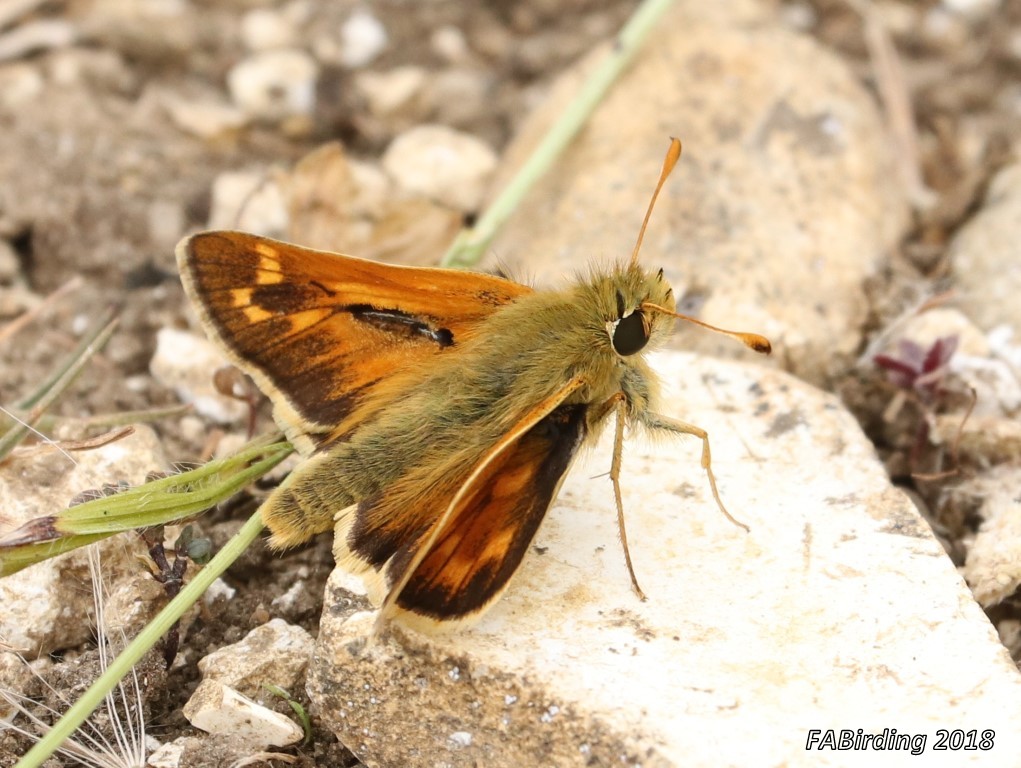
A few minutes later I located the species I was hoping to find, the rare Silver-spotted Skipper (Hesperia comma).

At around midday I was joined by the large group of BC members on this section of open hillside where a few more Silver-spotted were seen.

A male Chalkhill Blue (Lysandra coridon) was another first for me for 2018.

Above are just a few of the other species logged during our walk, including Silver-washed Fritillary, Marbled White, Speckled Wood, Common Blue and Brimstone.

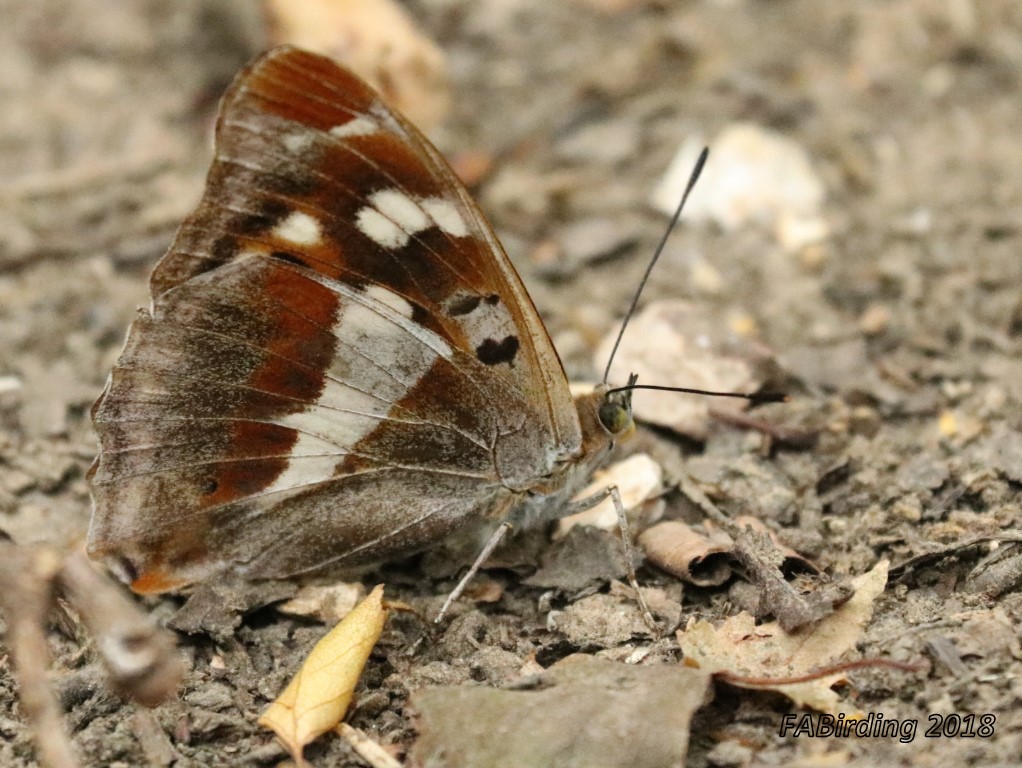
The final new sighting was a very drowsy female Purple Emperor (below) who eventually fluttered high into the nearby woodland

Linking to:

Saturday, 22 July 2017

Flutters on Headley Heath.

On Thursday, together with 15 other enthusiasts, I took part in a butterfly walk at Headley Heath with its mixed habitats of heathland, chalk downland and mixed woodland. During the first hour there was very little 'flutter' activity due to the blustery wind and light rain showers but from mid-day onwards things brightened up and we eventually logged 22 species.

Once again the new macro lens was in action and here are just a few of the species I photographed.

 Chalkhill Blue (male).

Silver-Y Moth.

Small Copper (male).

While there were a few Common Blues on the wing once the sky brightened up it was very pleasing to find a Brown Argus, initially perched with closed wings and then it decided to show its upper wing surfaces.


Just before we stopped to consume packed lunches one person spotted and photographed a White-letter Hairstreak but it promptly flew away. After lunch we staked out the location and eventually relocated this fairly worn individual.

Several Silver-spotted Skippers were seen and I managed a clearer shot than my previous effort earlier in the week at Juniper Bottom.

Unfortunately the woodland failed to produce a sighting of a Purple Emperor BUT we saw plenty of Purple Hairstreaks (see below).

Initial views were individuals flitting around the Oaks, often at very low level and then one tame individual perched on our leader's finger for its photo call!


Linking to:

Friday, 15 July 2016

Recent Forays on Ashtead Common.

During the past week I have made three separate forays onto different parts of Ashtead Common and on each occasion whilst the temperature was more or less favourable the strong breezes and cloudy skies have conspired against me seeing and getting photos of some of the expected species. Nevertheless here are images of some of the species seen.

Large Skipper (Ochlodes venata). Of the three Skipper species this one is the easiest to find and identify and has been the most common on my transect walks from late June to date.

However the Small Skipper (Thymelicus sylvestris) has so far been less obvious than the same period last year and I have yet to find and clearly identify its close relative the Essex Skipper on my transect visits.

This mating pair of Small Skipper were spotted during a walk that I led for the local branch of Butterfly Conservation on Thursday when a total of 17 species was recorded including many Purple Hairstreak and Purple Emperor (c20) flying high above the Oak canopies. One Purple Emperor tantalisingly fluttered around a few of us at head height for a few minutes but failed to land!

Small White (Pieris rapae).

Comma (Polygonia c-album).

Red Admiral(Vanessa atalanta).

The most numerous species both on my woodland transect and other walks on the common at the moment is the Ringlet (Aphantopus hyperantus) which is happy to fly providing there is a little warmth even on the dullest of days.

The BC walk on Thursday also provided my first local sighting of a fresh male Gatekeeper (Pyronia tithonus).

Finally this Beautiful Demoiselle (Calopteryx virgo) below was seen as I wandered alongside the stream on my return to the car and was certainly aware of my presence.


Thursday, 7 July 2016

Butterfly Forays.

A visit at the end of June, albeit on a slightly overcast and windy morning, to Juniper Bottom enabled me to catch up with a few more butterfly species on the chalk downland slopes.

The most obvious flutter on the wing when the sun chose to briefly show itself was the Marbled White (Melanargia galathea ) often stopping to nectar for a few moments on the wild privet.

It is quite common to find Marbled Whites with red parasitic mites clinging to the thorax, head or abdomen. Studies indicate that these mites Trombidium breei are harmless to the butterfly, and have no detectable effect on the flight performance, orientation ability or lifespan. The same species of mite parasitises several other grassland butterflies including Meadow Brown, Gatekeeper, Common Blue, Chalkhill Blue, Adonis Blue and Small Skipper.


The images above and below are the female Marbled White.


After a little searching I finally located a pair mating (see below) deep down in the grasses.

This view shows the distinctive difference between the sexes by comparing the dark peppered patterns on the under wings; a neutral grey colour on the male, while in the female they are a warm grey brown.

Small Skipper(Thymelicus sylvestris).

Small Tortoiseshell (Aglais urticae).

Dark Green Fritillary (Argynnis aglaja).

Today I co-led a walk on Epsom Common where Large Skipper, Large White, Brimstone, Marbled White, Small Tortoiseshell, Comma, Red Admiral, White Admiral, Silver-washed Fritillary, Purple Hairstreak, Speckled Wood, Meadow Brown, and Ringlet were seen. 

 Comma (Polygonia c-album).

However I suspect the star species for most of the 27 participants was the Purple Emperor. Whilst we had two sightings of males flying fairly high during our walk the bonus was a male fluttering around us at head height at the end of the walk. It then decided to rest at our feet for over 45 minutes. Just a pity it didn't open its wings!

Purple Emperor (Apatura iris).

Next Thursday I have agreed to lead a walk on Ashtead Common so providing the weather obliges we should have more sightings of Purple Emperor and I might get the opportunity to grab some images of Purple Hairstreak, White Admiral and Silver-washed Fritillary. FAB.

Linking to:
Saturday's Critters

Wednesday, 22 June 2016

A Skipper at long last.


My first Skipper sighting for this year was recorded last Sunday some 100 yards before the start of my Ashtead Common transect. I watched two male Large Skipper (Ochlodes sylvanus) nectaring on a patch of bramble flowers constantly being disturbed by a couple of Meadow Brown.


With much better weather forecast for this coming weekend I will be hoping to record Skippers during my planned transect walk.


I did record two Meadow Brown (Maniola jurtina) on the transect last Sunday under a cloudy sky and again I am anticipating that larger numbers will be on the wing this coming weekend together with Ringlet and a few other emerging species.


Tuesday, 14 June 2016

Local Patch Wildlife.

It has been another week of some sunshine and plenty of showers and the pattern is set to continue well into this week. Certainly not a pleasant situation for much of our wildlife.

Once again my woodland butterfly transect walk on Saturday produced very few sightings despite the warm, humid temperature. Just a few Speckled Wood (see above) plus Green-veined White and Brimstone. I'm guessing it might be a couple of weeks before any new species such as the Skippers, Meadow Brown and Ringlet start to emerge due to all the wet weather.

A few moths and flies were on the wing but only this Scorpion Fly perched for a photo-call.


One species that definitely caught my attention was an immature female White-legged Damselfly hiding amongst the grasses close to a small pond in the woodland. From memory this is the first season that I have recorded them in this spot so I'll need to keep an eye open for any male activity over the next few weeks.

Returning through the woodland close to the car park I heard the very distinctive incessant begging calls of young Great Spotted Woodpecker (below) and fairly easily located the nest hole in a Birch. I had to wait for quite some time to see the adults returning with food but my view was hampered by the increased greenery of other trees so only managed one shot of a youngster peeking out. 

Nesting Update (14/6):
I checked the above nest site again this morning and all was very quiet indicating that the youngsters have now fledged.

Whilst I have recorded the tiny Lesser Spotted  in the same area some years ago the other common resident species is the Green Woodpecker (above) but I haven't yet found evidence of any breeding activity.


One species that only occasionally turns up, usually in the winter months, is the Greylag Goose but this individual was actually paired up with a Canada Goose (see below) just over a week ago but I don't think they have stayed around to breed another hybrid!

Linking to:

LinkWithin

Related Posts with Thumbnails