Showing posts with label Dark Green Fritillary. Show all posts

Saturday, 21 July 2018

Headley Heath Fieldtrip.

Early on Thursday morning I spent a couple of hours wandering across the chalk heath and downland at Headley in the hope of adding a few species to my photo album for this season before joining an pre-planned Butterfly Conservation fieldtrip around this National Trust site.

Not unsurprisingly the most numerous species were the Gatekeeper (above) and Brown Argus (below) frantically nectaring everywhere I trod.


Not initially finding any of my target species I decided to sit awhile at a convenient spot and just soak up the atmosphere and monitor the comings and goings and nearby I spotted a couple of moths.

A Silver-Y and a Common Purple and Gold (Mint Moth).

As the temperature started to rise there was a marked increase in aerial activity and whilst I had seen Dark Green Fritillary at another site earlier this month I had not previously managed to grab any images so finding a female briefly perched was a bonus. I also saw two others, probably males, flying strongly across the hillside.


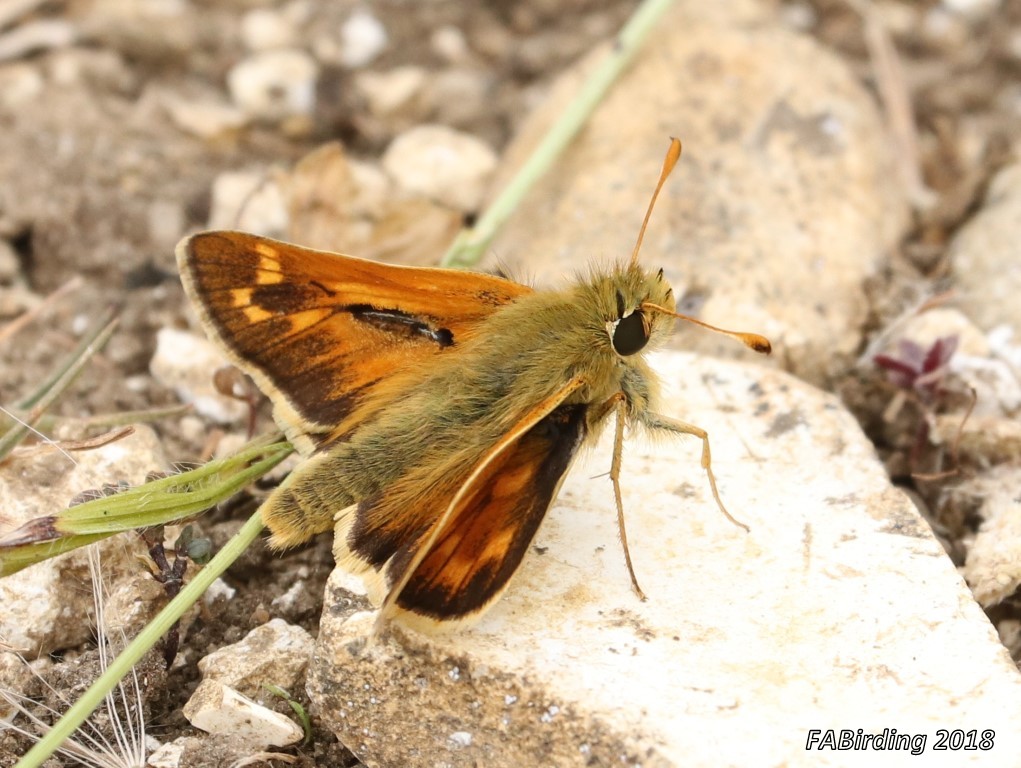
A few minutes later I located the species I was hoping to find, the rare Silver-spotted Skipper (Hesperia comma).

At around midday I was joined by the large group of BC members on this section of open hillside where a few more Silver-spotted were seen.

A male Chalkhill Blue (Lysandra coridon) was another first for me for 2018.

Above are just a few of the other species logged during our walk, including Silver-washed Fritillary, Marbled White, Speckled Wood, Common Blue and Brimstone.

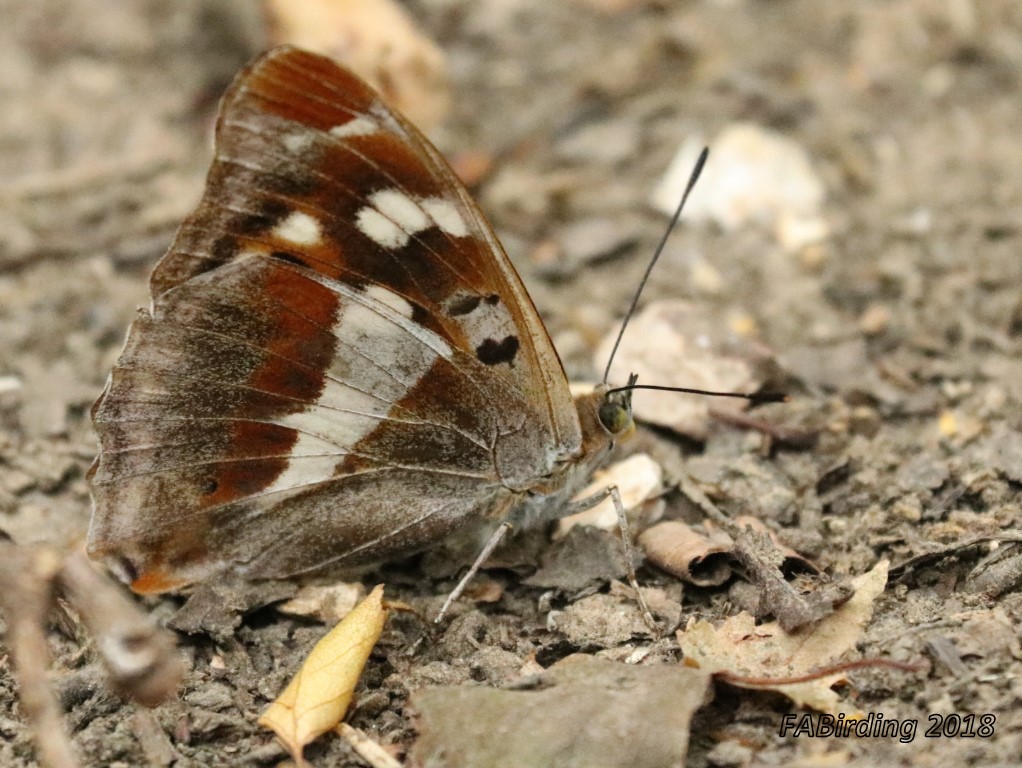
The final new sighting was a very drowsy female Purple Emperor (below) who eventually fluttered high into the nearby woodland

Linking to:

Thursday, 20 July 2017

Getting to grips with new gear.


At long last I finally decided it was time to upgrade from my trusty Canon 450D that has served me well for many years to something with a great deal more fire power and also add a macro lens to my tool box.

So earlier this week I paid an early morning visit to the lower chalk downland slopes at Juniper Bottom together with my new 80D and a 100mm f2.8L Macro lens in anticipation of finding some 'flutters' to photograph.

Whilst the temperature was a reasonable 19 deg.C there was a blustery wind and nothing appeared to be on the wing until I spotted a lonely male Marbled White hunkered down in the grass.

Over the following twenty minutes it constantly flitted around the hillside rarely stopping to perch for a second or two but finally came to rest long enough to test the new set up.


As the morning wore on I found a few other species.

A male Common Blue.


And fairly close by was a female Common Blue (below).


When the sun disappeared behind the clouds I turned my attention to the varied selection of wild flowers scattered over the grassland.


Attaching an extension tube to the macro lens gave me an opportunity to test its use with some close-ups of Knapweed bracts (below).


A male Small Skipper.

A chance find was this Silver-Spotted Skipper hiding close to my feet and I only managed one shot before it flew away never to be seen again!

There were plenty of Six-spot Burnets all over the grassland.
 
One species I was hopeful of seeing was the Dark Green Fritillary (below). I followed several up and down the slope for what seemed ages before getting just one shot of this individual as it perched briefly.


Having reviewed all the images taken during this test excursion I am very pleased with the outcome and performance of the new gear ... just need to get used to the different button layout on the 80D and maybe read the instruction manual. FAB.

Thursday, 7 July 2016

Butterfly Forays.

A visit at the end of June, albeit on a slightly overcast and windy morning, to Juniper Bottom enabled me to catch up with a few more butterfly species on the chalk downland slopes.

The most obvious flutter on the wing when the sun chose to briefly show itself was the Marbled White (Melanargia galathea ) often stopping to nectar for a few moments on the wild privet.

It is quite common to find Marbled Whites with red parasitic mites clinging to the thorax, head or abdomen. Studies indicate that these mites Trombidium breei are harmless to the butterfly, and have no detectable effect on the flight performance, orientation ability or lifespan. The same species of mite parasitises several other grassland butterflies including Meadow Brown, Gatekeeper, Common Blue, Chalkhill Blue, Adonis Blue and Small Skipper.


The images above and below are the female Marbled White.


After a little searching I finally located a pair mating (see below) deep down in the grasses.

This view shows the distinctive difference between the sexes by comparing the dark peppered patterns on the under wings; a neutral grey colour on the male, while in the female they are a warm grey brown.

Small Skipper(Thymelicus sylvestris).

Small Tortoiseshell (Aglais urticae).

Dark Green Fritillary (Argynnis aglaja).

Today I co-led a walk on Epsom Common where Large Skipper, Large White, Brimstone, Marbled White, Small Tortoiseshell, Comma, Red Admiral, White Admiral, Silver-washed Fritillary, Purple Hairstreak, Speckled Wood, Meadow Brown, and Ringlet were seen. 

 Comma (Polygonia c-album).

However I suspect the star species for most of the 27 participants was the Purple Emperor. Whilst we had two sightings of males flying fairly high during our walk the bonus was a male fluttering around us at head height at the end of the walk. It then decided to rest at our feet for over 45 minutes. Just a pity it didn't open its wings!

Purple Emperor (Apatura iris).

Next Thursday I have agreed to lead a walk on Ashtead Common so providing the weather obliges we should have more sightings of Purple Emperor and I might get the opportunity to grab some images of Purple Hairstreak, White Admiral and Silver-washed Fritillary. FAB.

Linking to:
Saturday's Critters

Friday, 11 July 2014

Butterfly Forays - Part 2.


Following on from my first post in this series I am returning to the grassy slopes below Juniper Top, near Mickleham for another special butterfly that is found on open flowering downland .. the fast, powerful flying Dark Green Fritillary (Argynnis aglaja).

Whilst mesmerized by the numbers of Marbled Whites flapping lazily across the meadow locating where any of the robust male Dark Green Fritillary eventually settled took a lot of patience and as soon as I got reasonably close they immediately flew far away across the slope. So after a number of aborted attempts I decided the best option was to sit and wait until one eventually perched fairly close by and here is a sample of my first ever session with this species.


All these images were taken handheld using the 450D with the 70-300mm lens. More species coming up in Part 3.  FAB.

Linking to Camera Critters and Saturday's Critters.

Follow my blog with Bloglovin

Wednesday, 29 August 2012

Bucking the trend.

The dreadfully wet weather conditions that have blighted our spring and summer here in the UK has been pretty disastrous for many of our butterfly species with vastly reduced numbers being recorded. However, it now appears that every cloud does have a silver lining; and in this case it is a silvery-blue one.
Apparently phenomenal numbers of the beautiful Chalkhill Blue (Lysandra coridon) emerged on some areas of the South Downs at the beginning of August, providing a spectacle seldom witnessed since Victorian times.
So a couple of weeks ago I took the chance to drive over to Denbies Hillside on a sunny but very breezy morning to check out the grassland slopes. Initially nearly all the resident species were perching low down in the grass with wings closed waiting for the conditions to improve but as the warmth of the sun increased I gained a few photo opportunities of this distinctive chalk downland species.


In most summers competition for limited resources dictates the size of the adult population, particularly when drought conditions restrict the availability of larval food-plants. However, this year, it now seems likely that the excessively wet conditions have resulted in unusually lush growth of nitrogen-rich Horseshoe Vetch plants, capable of supporting a veritable army of this butterfly's green and yellow slug-like caterpillars.

 These guys were enjoying another source of nutrients ... left behind by one of the many doggie walkers!


Of course, these weren't the only flutters on show ..... so here are a few of the other grassland species.

Marbled White.

Six-spot Burnet.

 Dark Green Fritillary ... a slightly washed out female.

Gatekeeper.

P.S. I regret that blogging has had to take a back seat over the past month or so ... partly due to the lack of postable wildlife material but mainly because of my father's health problems. After a meeting with his specialist on the 17th he was admitted to hospital on the 21st and had his remaining leg amputated last Friday. He is bearing up extremely well and although he would prefer to be back home this will take some time as he now has to undergo some extensive physiotherapy and reassessment of his capabilities. For an 87 year old I have no doubt that with the appropriate support he will once again be 'bucking the trend'.  FAB.

LinkWithin

Related Posts with Thumbnails