Showing posts with label Chalkhill Blue. Show all posts

Saturday, 21 July 2018

Headley Heath Fieldtrip.

Early on Thursday morning I spent a couple of hours wandering across the chalk heath and downland at Headley in the hope of adding a few species to my photo album for this season before joining an pre-planned Butterfly Conservation fieldtrip around this National Trust site.

Not unsurprisingly the most numerous species were the Gatekeeper (above) and Brown Argus (below) frantically nectaring everywhere I trod.


Not initially finding any of my target species I decided to sit awhile at a convenient spot and just soak up the atmosphere and monitor the comings and goings and nearby I spotted a couple of moths.

A Silver-Y and a Common Purple and Gold (Mint Moth).

As the temperature started to rise there was a marked increase in aerial activity and whilst I had seen Dark Green Fritillary at another site earlier this month I had not previously managed to grab any images so finding a female briefly perched was a bonus. I also saw two others, probably males, flying strongly across the hillside.


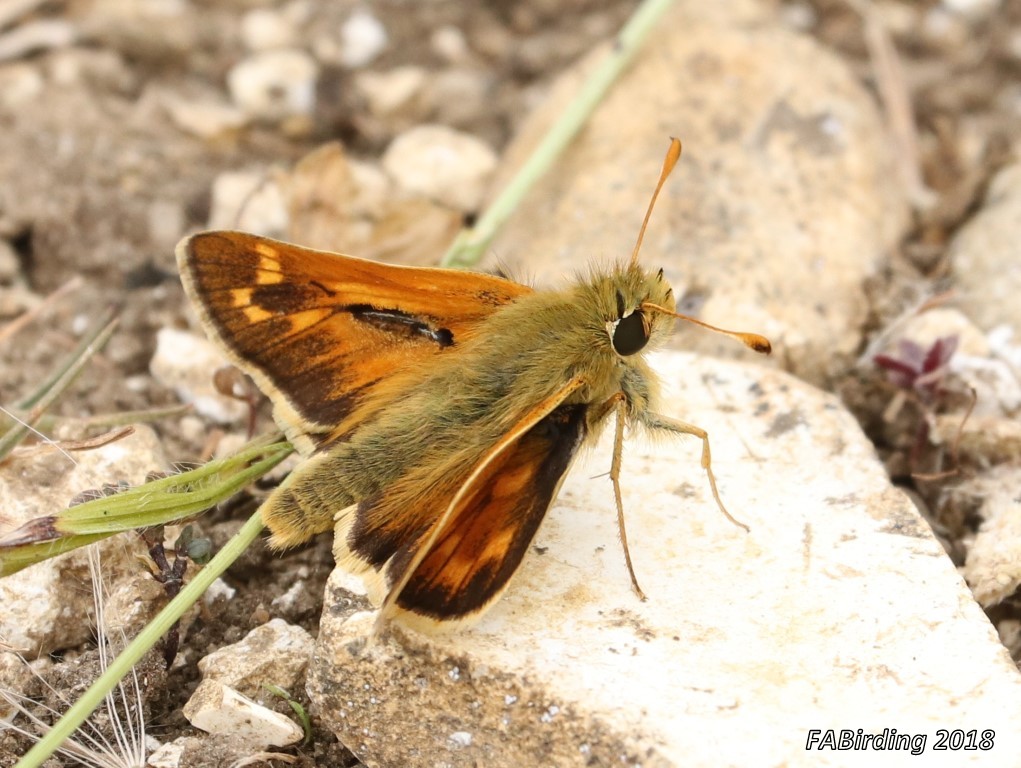
A few minutes later I located the species I was hoping to find, the rare Silver-spotted Skipper (Hesperia comma).

At around midday I was joined by the large group of BC members on this section of open hillside where a few more Silver-spotted were seen.

A male Chalkhill Blue (Lysandra coridon) was another first for me for 2018.

Above are just a few of the other species logged during our walk, including Silver-washed Fritillary, Marbled White, Speckled Wood, Common Blue and Brimstone.

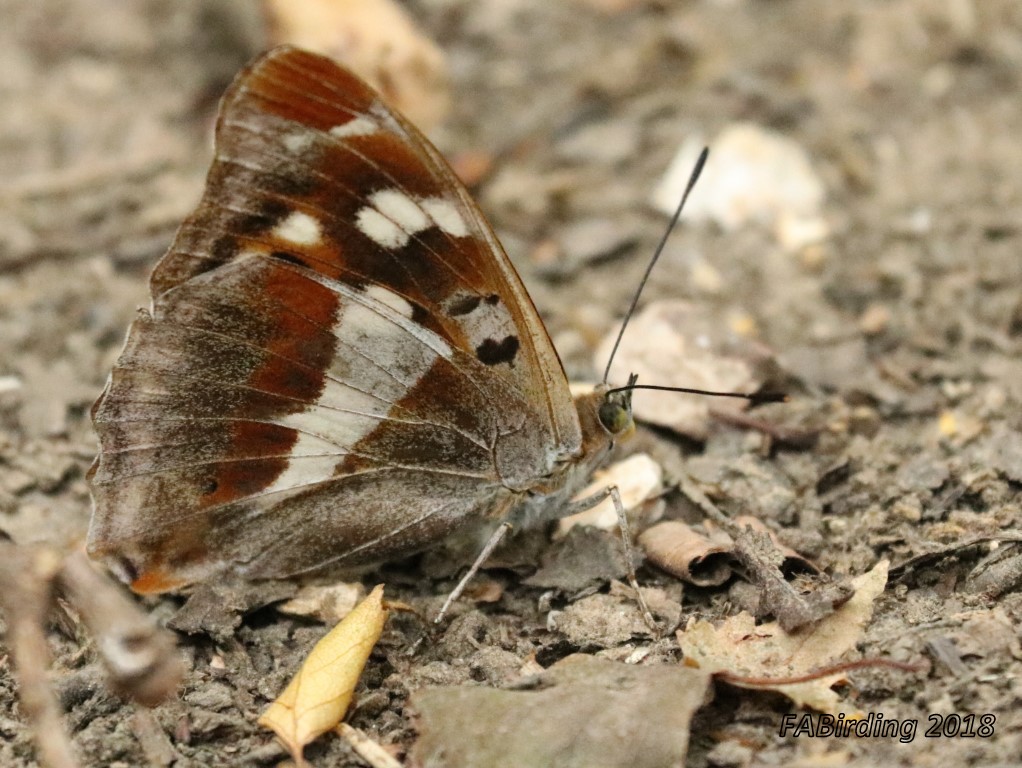
The final new sighting was a very drowsy female Purple Emperor (below) who eventually fluttered high into the nearby woodland

Linking to:

Saturday, 22 July 2017

Flutters on Headley Heath.

On Thursday, together with 15 other enthusiasts, I took part in a butterfly walk at Headley Heath with its mixed habitats of heathland, chalk downland and mixed woodland. During the first hour there was very little 'flutter' activity due to the blustery wind and light rain showers but from mid-day onwards things brightened up and we eventually logged 22 species.

Once again the new macro lens was in action and here are just a few of the species I photographed.

 Chalkhill Blue (male).

Silver-Y Moth.

Small Copper (male).

While there were a few Common Blues on the wing once the sky brightened up it was very pleasing to find a Brown Argus, initially perched with closed wings and then it decided to show its upper wing surfaces.


Just before we stopped to consume packed lunches one person spotted and photographed a White-letter Hairstreak but it promptly flew away. After lunch we staked out the location and eventually relocated this fairly worn individual.

Several Silver-spotted Skippers were seen and I managed a clearer shot than my previous effort earlier in the week at Juniper Bottom.

Unfortunately the woodland failed to produce a sighting of a Purple Emperor BUT we saw plenty of Purple Hairstreaks (see below).

Initial views were individuals flitting around the Oaks, often at very low level and then one tame individual perched on our leader's finger for its photo call!


Linking to:

Saturday, 23 July 2016

Blustery Blues.

On Wednesday morning I paid a visit to the grassland slopes at Denbies Hillside. On arrival at 8 am the sun was shining with a cooling southerly breeze and only a handful of butterflies were spotted as I slowly descended Steers Field. Within half an hour the wind strength increased dramatically and the sun was blotted out with total cloud cover so my hopes of finding some perfectly perched Chalkhill Blues was looking grim. 

I traversed the slope for over an hour and eventually found a couple of individuals sitting out the blustery conditions.

My initial efforts using the 70-300 lens were not very successful so as the subjects were less concerned about my presence than staying upright as they swayed in the wind I reverted to using my handy Powershot S95 to get some reasonable close ups.

As the wind strength occasionally eased I started to see a few specimens briefly in flight and then drop onto the ground to wait out the next series of gusts.

 Chalkhill Blue (male).

Chalkhill Blue (female).

Towards the end of my visit I was eventually able to revert back to using the 70-300 lens to produce this final collage of one female and several males.


Thursday, 20 August 2015

Hillside Blues.

Following a pre-booked appointment on Monday morning to obtain some advice and an estimate for some much needed and doubtless expensive improvements to our heating system I decided to head over to Denbies Hillside on the North Downs.

Chalkhill Blue (male)
My ultimate quarry was the rarest of our downland blue butterflies on the edge of its European range in this area.

As I slowly descended the slope, with the sun hidden behind clouds, my initial views were only of the undersides of another species also characteristic of the warm chalk hillsides of southern England, a few Chalkhill Blue waiting for the sun to shine.

When the sun reappeared the flutters slowly emerged including Small Heath, Meadow Brown, Gatekeeper, Brimstone, Painted Lady plus  a Spotted Skipper and then the hillside around me was alive with many Chalkhill Blues. 


Chalkhill Blue (Polyommatus coridon)


Common Blue (Polyommatus icarus)


As my search continued across the hillside another blue species alighted close by but this turned out to be just a Common Blue (Polyommatus icarus).
I was beginning to get a little frustrated that I couldn't spot my ultimate quarry until I heard a comment between two ladies walking nearby indicating that they had just seen a different blue butterfly that they couldn't identify. Renewing my efforts I eventually found a few males of this stunning species with the distinctive black lines through the white fringes of the wings.

Adonis Blue (Polyommatus bellargus)


With wings closed the Adonis is very similar to the Chalkhill but with wings open the males are easy to distinguish from one another. The image (bottom right) in the above collage shows several of both species taking minerals from a patch of animal faeces.


Both species share other common factors. Their larval food plant is exclusively Horseshoe Vetch and their larvae are adopted by red (Myrmica) or black (Lasius) ants. The Adonis thrives in sward of 1-6cm and the local rabbit population certainly helps to maintain these conditions.

On a track beneath the hillside is a superb wood carving that depicts the life cycle of this fabulous blue flutter.

Having finally achieved my goal I climbed back up the steep slope and made my way home with a few decent images to share. FAB.

Linking to:
Saturday's Critters

Thursday, 30 July 2015

Walking the Chalk.

With a definite lack of warmth and sunshine to undertake my local butterfly transect this morning I decided to drive over to a favourite spot on the North Downs and slowly descended the chalk hillside in search of a particular silvery-blue butterfly.

It didn't take long for me to find a male Chalkhill Blue (Lysandra coridon) perched on the abundant wild thyme but typically with its wings closed as the sun had disappeared. However it wasn't too long before I was allowed a glimpse of its characteristic colourful upper wings. 


When the sun eventually poked through the heavy cloud layer there were Chalkhill Blues fluttering everywhere and occasionally one would sun itself on the pathway in front of my feet.


So with mission accomplished and more cloud drifting overhead it was time to gather some strength and ascend that slope. 


Linking to Good Fences hosted by TexWisGirl.

Friday, 18 July 2014

Hillside Wander.

For this weeks edition of Good Fences (hosted by TexWisGirl) why not follow my journey as the boots take another leisurely wander around Denbies Hillside on the North Downs.

From my starting point the path drops steeply downwards across Steers Field, with a view of the South Western Weald stretching out way below, to the first of many gateways beyond which I enjoy the sight of many Chalkhill Blues and Marbled Whites. Most of them were males on the wing hunting for a female but a few stopped for either a rest or a top up of nectar.


I think about taking a rest in the shade by the gate that leads into the woodland but there are far too many distractions such as lots of Cobweb Spiders including a Funnel Weaver waiting at the entrance to its lair hidden within the shaded brambles, plus Six-spot Burnet and Skippers perched nearby in the sunshine.


After an hour or so in the sunshine with the temperature rising to around 28 deg C I decide to rest awhile about two thirds of the way along the downward slope, amongst the grasses and wild flowers, and soak in the view southeastwards as the clouds slowly drifted in that direction.

At the foot of the slope I pass through a small shaded copse with two more gates to negotiate and then get a reverse view of hillside route I have just descended.


As I turn eastwards I am serenaded by the song of a Goldfinch while a tiny Goldcrest underneath the light green beach canopy checks out the 'watcher' before continuing its late morning search for insects.


So finally I'm on level ground on an ancient track that follows the boundary of the original iron Denbies Estate fence. Erected in the 1890's and definitely built to last.


I am quite surprised by the view ahead with large patches of tall growing Narrow-leaved Everlasting Pea (Lathyrus sylvestris) adorning the track side verges and being visited by various flutters including the Chalkhill Blue and a number of Brimstone and Gatekeepers.


Blooms reaching high above the fence wire.

The trackway eventually enters some welcome shade and I turn north to climb very slowly back up the hillside. After 60 steps and another gate the view opens up to the final grassy slope that needs to be conquered for me to reach the the beginning and the end of my hillside wander.


I hope you managed to keep up with me .. no apologies for the length of this post.  FAB. 

For this months images of Birds, Butterflies and Odonata please check out my photo blog.

Tuesday, 15 July 2014

The hillside is alive ...


The image above doesn't really do the scene justice as over a distance of  80 yards along this south facing downward slope at Denbies Hillside this morning I logged well in excess of 100 butterflies. Marbled Whites, Common Blue, Meadow Browns, Skippers and two Dark Green Fritillary but the most conspicuous were the numerous Chalkhill Blue (Lysandra coridon) males on the wing.


One pristine male perched favourably and then allowed a shot on its under wing pattern (below).


Thanks to the eagle eyes of another 'watcher' on the slopes I was able to locate just one dark female hidden deep within the grasses.


She remained totally unmolested by any males and the crept deeper into the vegetation allowing a momentary view of her under wing pattern before eventually flying away to another hidden location.

All the above images were taken with the PowerShot SX50 HS.

During the rest of my walk I also logged Brimstone, Gatekeeper, Comma, Red Admiral, Six-spot Burnet plus Goldfinch, Goldcrest, Blue Tit, Blackbird, Carrion Crow, Swallows, Kestrel, Sparrowhawk, Hobby and two Ravens called as they flew north west over the ridge.

Towards the end of my hillside foray the westerly breeze increased and almost everything took shelter deep within the grassy slope.  FAB. 

Linking to Nature Notes.

LinkWithin

Related Posts with Thumbnails