Showing posts with label Purple Hairstreak. Show all posts

Tuesday, 7 August 2018

Transect Update - Weeks 18 and 19.


On my last two weekly walks I thought the conditions were ideal for butterflies, with temperatures in the mid 20's and plenty of sunshine, but only 10 separate species were logged and in very low numbers. However the photo opportunities for several species; all seen in Section 4, a large open glade; made up for the lack of overall activity.

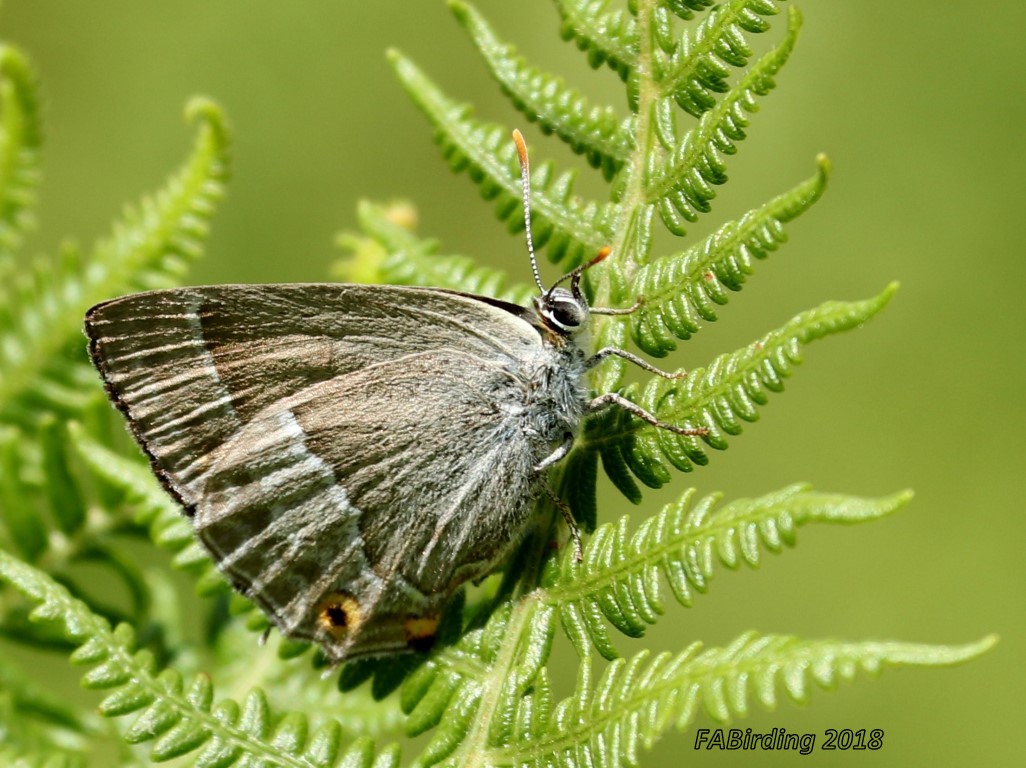
One of seven Purple Hairstreaks recorded over the last two weeks and brings this seasons total up to 96 individual sightings for this species..


The highest tally of just 10 for an individual species was the diminutive Brown Argus


Flying in the same area as the Brown Argus were several male Common Blues, the first of two new species recorded on the transect since I started in 2015, but I only managed an underwing shot (below).


The second new sighting was the Small Copper (below) with 5 individuals counted over the last two weeks.

This little flutter definitely thrives in hot, sunny conditions. In good years three or even four broods might be produced but if the summer weather turns cool and wet the populations crash and can take several years to recover.


Linking to:
Nature Notes.

Friday, 27 July 2018

Transect Update - Weeks 16 and 17.


The temperatures during my Week 16 and 17 transect walks varied between 24 and 28 deg.C definitely the hottest and most humid so far this season with the total number of sightings dropping slightly in the higher temperature last week.

Gatekeepers continued to be the highest recorded species over the last two weeks.

Gatekeeper


Sightings of all the three Skipper species recorded on the transect has shown a downward trend for the last three years. The reasons could be weather related at the larval stage; the timing when the grass rides are mown plus the ever increasing spread of bracken outcompeting the grasses.

Essex Skipper
Although the number of Meadow Brown and Ringlet logged during weeks 16 and 17 have fallen they continue to be the top two annual recorded species for this transect.

Ringlet
Perhaps not unexpectedly for this oak woodland site the one species that has done exceptionally well this year is the Purple Hairstreak. On the 21 July I recorded 26 and last week I logged 43 with many other sightings away from the transect.

Purple Hairstreak


Just one Marbled White seen again in Section 4 last week.

Marbled White

Two other species that has definitely caught my eye this season are the diminutive Brown Argus with nine individuals recorded last week plus six Common Blue.

Common Blue - Female (left) Male (right)

Brown Argus

Over the last 17 weeks I have now recorded 1024 separate sightings of 21 species. This total to date far exceeds any of the previous three years annual counts BUT this does not infer that some of these flutters are doing well just that the recent lengthy period of warmer conditions has brought them out of hiding and made it easier to find and count them.

Linking to:

Friday, 29 June 2018

Transect Update - Week 13.

Once again I chose Sunday 24th to undertake my 'Week 13' transect walk on Ashtead Common under a cloudless sky and a temperature of around 24 deg. C so I was thankful for the overhead green canopy providing some respite from the sun.

On the quarter mile walk to the start of the transect I always stop at a sunny open spot where there is an area of brambles and this often provides an indication of what I may record on the actual transect.


On this occasion there were several Meadow Browns, Ringlet, Large Skippers and a single Marbled White (left) made a brief nectar stop. Unfortunately no Marbled Whites turned up during my timed walk. 

One of the resident Common Buzzards made a fly past as I started my timed walk.


Section 1 produced three new species for this year. First was the Ringlet (above) and ultimately I saw them in all 8 sections recording a total of 58 individuals. Next was a single Purple Hairstreak flying up through one of the oaks.

At the beginning of Section 3 I found another Purple Hairstreak settled on the bracken and when it turned around I noticed a black addition (see below) to the centre of its underwing. I am guessing this may be some form of tick that has attached itself. Sections 4 and 8 also produced single sightings of this species.


The third new addition seen in Sections 1 and 3 was the Silver-washed Fritillary and I logged a total of just four males with only one stopping long enough for a photo call.

As expected the most prominent species was the Meadow Brown again recorded in all sections of the transect with a total of 73 logged.

White Admiral (above) turned up in 5 out of 8 sections with a total of 10 recorded during my walk. With a cumulative count of 27 individuals on my last two walks makes 2018 the best year for this species.

Finally the walk produced sightings of 10 species including Small/Essex Skippers, Large Skipper, Large White and Green-veined White with an overall total of 166 individual butterflies recorded.

Saturday, 22 July 2017

Flutters on Headley Heath.

On Thursday, together with 15 other enthusiasts, I took part in a butterfly walk at Headley Heath with its mixed habitats of heathland, chalk downland and mixed woodland. During the first hour there was very little 'flutter' activity due to the blustery wind and light rain showers but from mid-day onwards things brightened up and we eventually logged 22 species.

Once again the new macro lens was in action and here are just a few of the species I photographed.

 Chalkhill Blue (male).

Silver-Y Moth.

Small Copper (male).

While there were a few Common Blues on the wing once the sky brightened up it was very pleasing to find a Brown Argus, initially perched with closed wings and then it decided to show its upper wing surfaces.


Just before we stopped to consume packed lunches one person spotted and photographed a White-letter Hairstreak but it promptly flew away. After lunch we staked out the location and eventually relocated this fairly worn individual.

Several Silver-spotted Skippers were seen and I managed a clearer shot than my previous effort earlier in the week at Juniper Bottom.

Unfortunately the woodland failed to produce a sighting of a Purple Emperor BUT we saw plenty of Purple Hairstreaks (see below).

Initial views were individuals flitting around the Oaks, often at very low level and then one tame individual perched on our leader's finger for its photo call!


Linking to:

Tuesday, 19 July 2016

Leaf Sitters.

During my most recent butterfly transect walks, either late mornings or early afternoons, the much higher temperatures have meant that while a greater number of species have been recorded very few provided an opportunity to catch them perched with wings open with one or two exceptions.

A male Ringlet (Aphantopus hyperantus). Throughout the last two visits the numbers recorded have been slightly higher than the Meadow Brown.

Meadow Brown (Maniola jurtina).
 
One species that has certainly been more active during the sunshine and higher temperatures is the Purple Hairstreak flitting around the canopies of the numerous mature oaks. 

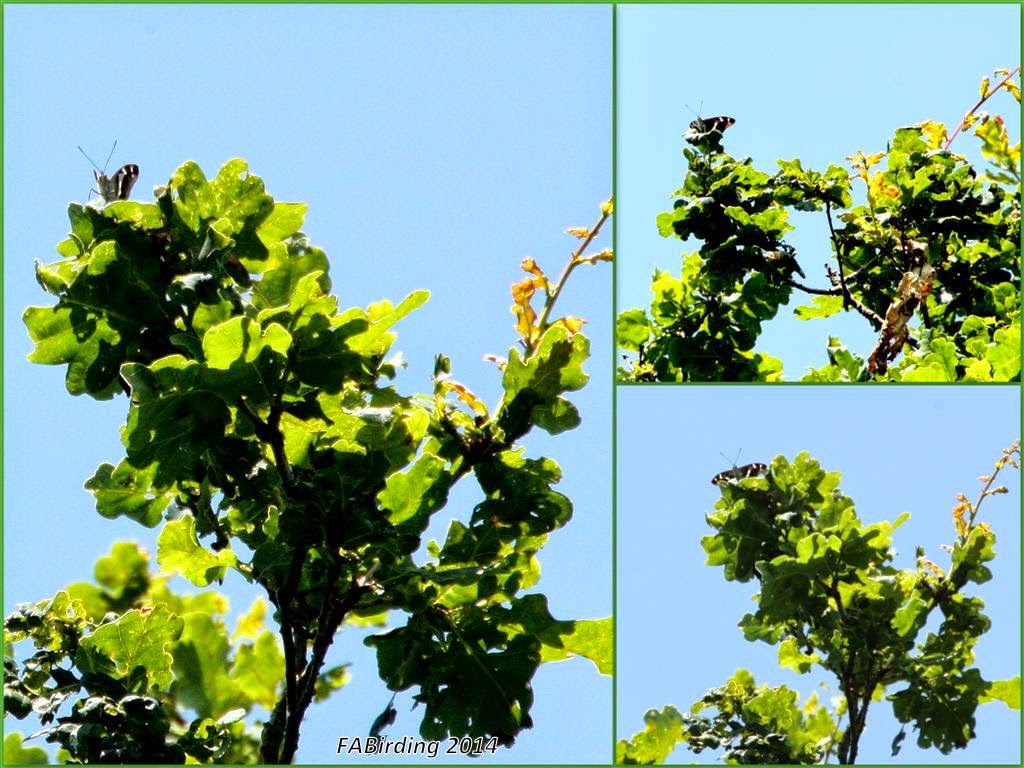
During my most recent walk I managed to locate one individual when it finally perched high above my head. The original image (right) is what I saw through the lens.

Below is a heavily cropped version of the original.


Purple Hairstreak (Favonius quercus).

One graceful species that had strangely eluded this years transect list up until this Monday was the White Admiral (Limenitis camilla) that tends to frequent sunlit glades within the mature broad-leaved woods. 

In between its territorial flights this individual consistently decided to perch one one of few sunlit leaves in this otherwise heavily shaded spot.

I decided that this was a good spot to watch and wait. Eventually one of the two individuals seen here perched very briefly on the bracken much closer to the lens.


Friday, 10 July 2015

Friday Flutters

My week started on Monday with a wander around the chalk hillside above Juniper Bottom in fairly windy conditions where hundreds of Marble Whites (Melanargia galathea) were flitting hither and thither.

On Tuesday I attended a Butterfly Conservation field trip to Sheepleas; comprising a mosaic of ancient and recent woodland, scrub and open grassland; lying on the chalk slopes of the North Downs. 

A nettle rich field produced good views of many species including Small Tortoiseshell (Aglais urticae). It was interesting to note that many individuals looked a lot smaller than normal.


A sunny glade in the woodland produced our best sightings of Silver-washed Fritillary (Argynnis paphia) with several males perched on umbillifers ...

... followed by a slightly more distant view of a mating pair, with the much darker coloured female above the male.
During this walk I logged 13 species including, after a long wait due to very gusty winds and intermittent showers, a high tree top view of a Purple Emperor.


On Thursday morning I made a brief check of the wildlife around the ponds on my local birding patch at Epsom Common and managed to get my first record shot of a Downy Emerald (Cordulia aenea) perched in the shaded vegetation above the water.


On my way back to the car park to join another Butterfly Conservation walk I recorded my first sighting of a Purple Emperor at this site (see my previous post "A Purple Day"), initially perched with its wings closed on a post before moving onto the ground to seek out some nutrients.


Purple Emperor (Apatura iris).

After everyone spent time enjoying the close views of the Purple Emperor we had a very pleasant two hour stroll around Epsom Common led by Alison Gilry, another transect recorder, enabling me to add Marbled White and Purple Hairstreak to my patch list sightings for this year.

Holly Blue (Celastrina argiolus)

Purple Hairstreak
After a lunch break three other butterfly enthusiasts joined me on my weekly transect walk on nearby Ashtead Common. 

Having those extra pairs of eyes and experience certainly helped with identification including an unexpected further sighting of two male Purple Emperor and a Purple Hairstreak (Neozephyrus quercus) both too far away for the lens so I have inserted a shot of the latter species taken last year.


Once again the transect produced sightings of eleven species; Small Skipper (4), Small/Essex Skipper (3), Large Skipper (3), Large White (1), Purple Hairstreak (2), White Admiral (3), Purple Emperor (2), Comma (2), Silver-washed Fritillary (1), Speckled Wood (2), Marbled White (1), Gatekeeper (5), Meadow Brown (41) and the most numerous was Ringlet (53).  FAB.

Ringlet (Aphantopus hyperantus).

Linking to:
Saturday's Critters hosted by Eileen and  
Nature Notes hosted by Michelle.

Saturday, 19 July 2014

Butterfly Forays - Purple Emperor and Hairstreak.

During the past two weeks I have been fortunate to see a total of 7 male Purple Emperor (Apatura iris) during visits to two separate local commons, including one individual flying just twenty feet above my head, but once again the only photo opportunities were males perched extremely high up on their Oak master trees. I am still hopeful that one day I might get one in the frame at a much lower altitude!

Indications from one local site (Ashtead Common) are that there are very good numbers of Purple Emperor on the wing this year so I'll definitely be going back subject to a spell of suitable weather.

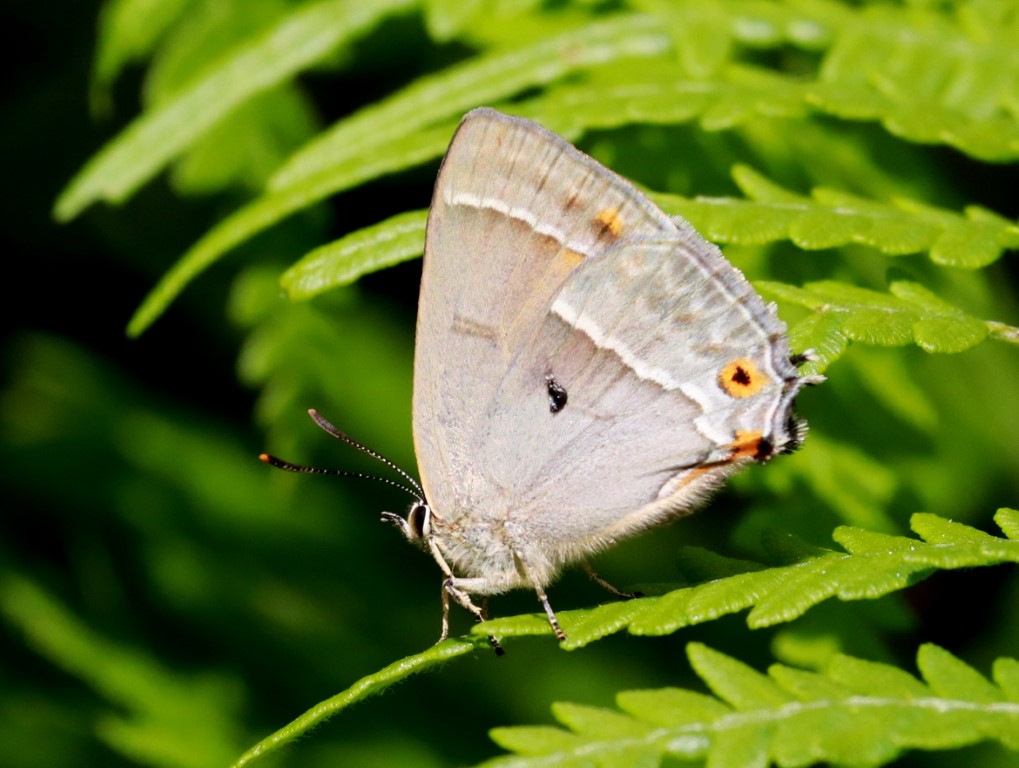
For the other species, the small Purple Hairstreak (Neozephyrus quercus) I stumbled across a single individual, probably a female, perched just a foot off the ground on the leaf of a Birch sapling on Bookham Common, and managed just one decent shot of its silvery under-wing (see below) before it disappeared from view.


All images were taken 'handheld' with the 450D and 70-300mm lens.  FAB.

Tuesday, 7 September 2010

Flutter Roundup (Part 1).

Many years ago I occasionally went birding with a very dour Scotsman who took a keener interest in butterflies than the birds. During the summer months I have often recalled a comment he made to me during a stroll around the countryside .... "When the birding activity drops away in summer you should switch to chasing butterflies ... there are only 59 resident species in the UK ... far smaller list than all the birds".
Well throughout the following years I never consciously followed his suggestion but this year I have tried to photograph every species that I have seen. Whilst I haven't kept a specific 'tick list', when sorting through all the images recently I discovered, to my surprise, that I have actually seen a total of 32 so far this year and most of them not too far from home.
Not unsurprisingly the most photographed was the Silver-washed Fritillary.

Here are some montages of the other species I have manged to capture.
Common and Holly Blues
Brown Argus, Green Hairstreak, Brimstone, Grayling, Purple Hairstreak and Green-veined White.
Gatekeeper, Meadow Brown, Orange-tip and the Comma.

In Part 2 I'll share an unexpected recent find plus a few more montages of the summer flutters.  FAB. 

LinkWithin

Related Posts with Thumbnails