Showing posts with label Coot. Show all posts

Sunday, 27 March 2016

Patch Birds: The Coot.


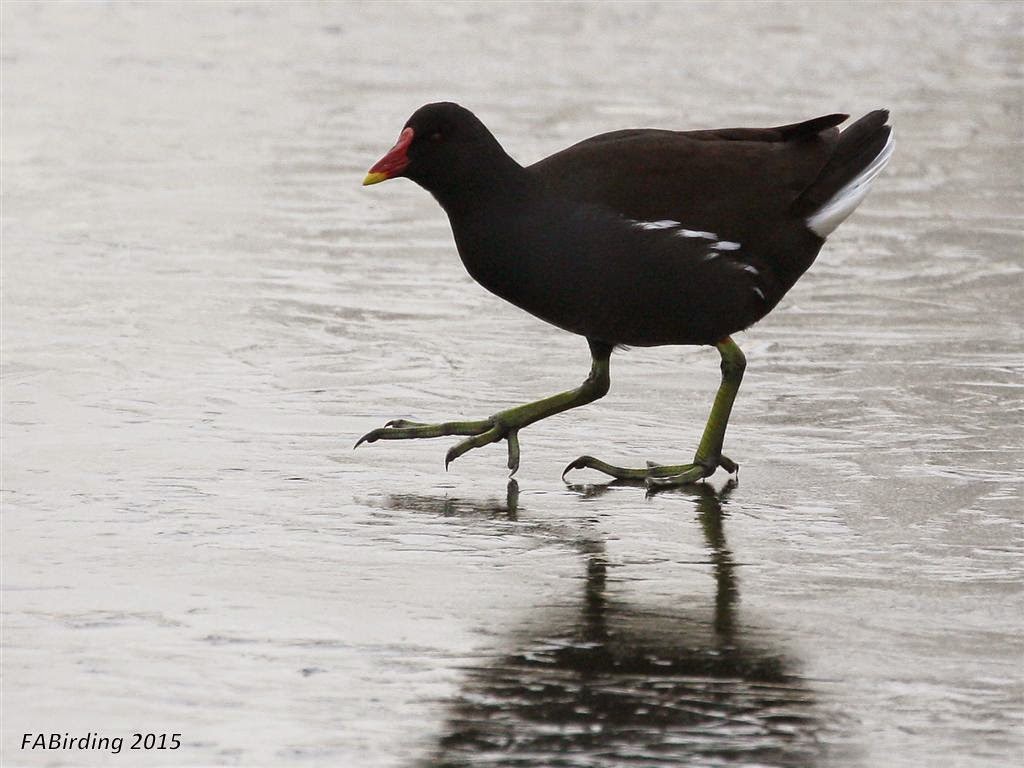
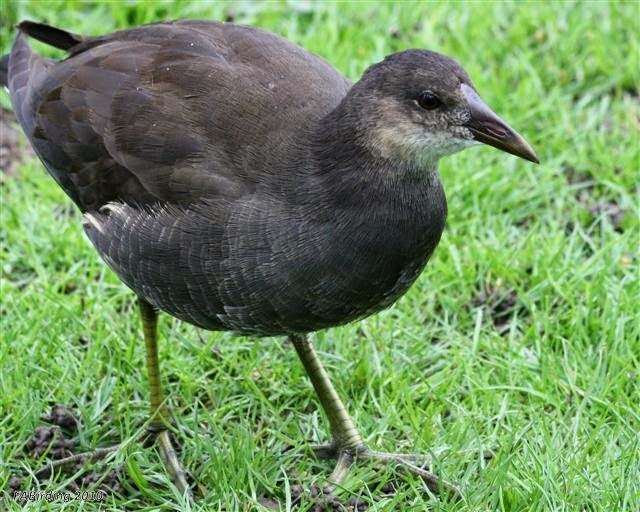
A regular sight around the Great Pond on my local patch during Winter and Spring is the Coot (Fulica atra). Unlike some larger water-bodies they only ever appear in very small numbers with currently just a pair in residence.

 How they never seem to trip over their own feet I'll never know!


Thursday, 11 February 2016

Patch Birds.


Visits to my local patch have been somewhat infrequent this year mainly due to the inclement weather. 

Earlier this week on a very blustery morning following severe overnight gales  initially there seemed to be very little avian activity apart from a single Black-headed Gull on sentry duty ...


 ... and a solitary Coot resting at the waters edge.


When I reached the Great Pond the effect of the recent high rainfall was clear to see with water stretching far beyond its normal boundaries. Again it appeared bird-less but as the sun peeked through several species emerged from the saturated wooded margins. I logged around 30 Mallard, a pair of Northern Shoveler, a single male Tufted Duck and a pair of Teal.


As I circled the pond I noticed the emergence of a very colourful species that regularly appears at this time of year ... Mandarin Ducks. Initially two pairs drifted into view and then a further six males joined the party.


After a short time at least four of the males departed. In previous years I have often seen ten or more males chasing after just one or two females before trying their luck elsewhere!

 It will be interesting to see whether any of the pairs hang around.  FAB.

Linking to WILD BIRD WEDNESDAY.

Wednesday, 18 March 2015

Birding Hotspot - Staines Reservoir.

For this weeks edition of Good Fences I'm taking you to one of the most exposed birding hotspots within the Surrey County recording area ... the Staines Reservoir causeway that bisects the north and south basins.

Definitely not the place to be on a dreary, cold and wet winter day unless you go well wrapped up but with rarities turning up anytime throughout the year sometimes you just have to brave the elements.

What I hadn't anticipated to find was that the north basin had been emptied for maintenance purposes but this does provide the ideal habitat for migrant waders etc to drop in from time time.

I recall this basin also being empty in September 2004 when I logged my first Pectoral Sandpiper in the UK.

Visitors this month have already included Avocet, Little Ringed Plover, Ringed Plover, Curlew, Dunlin, Ruff, Rock and Water Pipit, Oystercatcher, Black-tailed Godwit, Wheatear and a nearby Black Redstart.

Scanning the water to the south, while looking into the wintery sun,  and the mud to the north while coping with the interruptions of several wind driven rain showers wasn't particularly comfortable but I did locate the Great Northern Diver, Oystercatcher (2), Common Redshank (4), Lapwing, Dunlin (3) plus the usual ducks such as Wigeon, Teal, Gadwall, Goldeneye, Mallard, Tufted, Common Pochard, Northern Shoveler and several Shelduck.

Along the causeway bank I counted around 45 Pied Wagtails (Motacilla alba ssp. yarrellii) busily feeding on insects. I should have paid more attention to all these Wagtails as there was probably a White (ssp. alba) amongst them.  While looking through a small group of Meadow Pipits I located a moulting Water Pipit.

A Coot taking a stroll.

With a good number of [Eurasian] Wigeon frequenting the concrete slopes I couldn't pass up the opportunity for a few shots before heading home.

So enduring the elements added four species to my Surrey year list including one new addition to my 2015 annual list from the 29 species seen during a 55 minute visit.

Next time I'll try to plan a visit here when the sun is shining!  FAB.

Thursday, 5 February 2015

Coot Fighting.


In a previous post entitled 'Walking on Water' I promised to share a few images of two Coot fighting. Whilst I don't consider these shots to be 'best quality' they do at least provide an indication of the effort and aggression expended when two individuals decide to battle it out on the water.

As you can see the feet are used as the main attacking weapon as each individual tries to gain supremacy and push its opponent under the water. In this instance they were fairly evenly matched and neither eventually gained overall control of the other but they certainly churned up the water!


The moral of this session was 'don't mess with a Coot when it's in a fighting mood'.  FAB.

Tuesday, 3 February 2015

Walking on Water.

During a brief stroll around Heron Pond in Bushy Park on Monday I spent some time watching two of our aquatic species from the Ralidae family that have no difficulty 'walking on water' .... when it's frozen.

First up was the [Common] Moorhen (Gallinula chloropus) purposely stalking across the ice and typically carrying its tail high which it flicks up and down as it walks. Like other rails their long toes are spread well apart to provide them with excellent stability on such a slippery surface.


The other species was the [Eurasian] Coot (Fulica atra) with its distinctive white frontal shield and the lobed flaps of skin on its toes (see close up below). When fighting one another their feet play an important role in both attack and defence and I'll share a couple of recent images in a future post.


When one individual stepped off the ice into a small area of unfrozen water it was interesting to see how it gripped the ice ledge with its sharp toenails and used its wings to provide the impetus to regain its footing back on the thin ice.  FAB.


Linking to Wild Bird Wednesday.

Tuesday, 16 December 2014

Bittern at Barnes.


It was a chilly but clear morning on Sunday when I joined a Surrey Bird Club field-trip to the London Wetland Centre at Barnes. Some of the shallower parts of the extensive pools showed how cold it had been overnight with a thin layer of ice enabling this Coot to 'walk on the water'.

There were a number of species on our wish list and it wasn't long before the star attraction, a [Eurasian]  Bittern, (Botaurus stellaris) was located on the edge of a distant reed bed.

Typical of this well camouflaged species it stood stock still for many minutes before adopting its upright pose to scan the vicinity for a possible meal before disappearing into the reeds.


Other species logged included Lapwing, Mallard, Teal, Pochard, Gadwall, Northern Pintail, Tufted Duck, Moorhen, Cormorant, Little Grebe, Northern Shoveler, Wigeon, Mute Swan, Canada, Greylag and Egyptian  Geese, Gulls (Herring, Black-headed, Common and Lesser Black-backed), Grey Heron, Robin, Stonechat, Tits (Blue, Great and Long-tailed), Chaffinch, Goldfinch, Ring-necked Parakeet, Carrion Crow, Magpie and Blackbird.


Whilst high up in the Peacock Hide I watched a male Sparrowhawk dashing low over the marsh scattering the wildfowl, Pigeons and Starlings before coming to rest in a tree close by but getting a clear shot through the foliage was near impossible.

On returning to the WWT Hide with one of my colleagues we were both fortunate to get another view of the Bittern that had reappeared in almost the same spot.

After walking up through the reeds it eventually decided to fly off to another distant reed bed. 
For many of my fellow birders this was probably the best ever views they had experienced of this elusive species and I'm pleased to have got a few record images to share for this weeks edition of Wild Bird Wednesday.  FAB.

Sunday, 16 November 2014

Damp Patch Birding.

The current weather pattern, windy, damp and heavily overcast skies, has not been conducive for photography during my recent patch walks. Most of the small birds have stayed in hiding so just a few images of the larger species seen on or around the pond.

Coot still collecting material to build up or repair the nest.
 
A couple of Cormorants called in for a few days and one spent some time trying to capture some warmth from the limited sunshine.

Earlier this month a male Northern Shoveler turned up on the Great Pond but typically kept a long way away from the lens. I subsequently spotted him with his mate who spent most of her time in hiding.

Eventually managed to capture him out of the water.

Mute Swans don't turn up on the patch very often so it was nice to see a pair drop in if only very briefly.

A single Black-headed Gull takes a rest from its aerial circuits around the pond.

Moorhen .... and it's time to dig out the wet weather gear!  Linking to I'D-Rather-B-Birdin'.

Wishing everyone a wonderful wildlife watching weekend, wherever you are.  FAB.

Tuesday, 1 July 2014

Coot.


To the uninformed with its habit of swimming around on the surface of open water and diving to reach its food, it is easy to understand why many assume the Coot (Fulica atra) is some sort of duck.

However a quick look at those long legs and large, individually lobed feet (rather than webbed), designed for walking, running and even sprinting, mean that this is a member of the Rallidae family. 

Unlike a duck, the Coot is able to spread it weight and can be seen walking over floating vegetation, including water lilies and in this instance it was 'walking on the water'.


Most rails are shy, retiring and therefore often difficult to see but the Coot is fairly tame, numerous and more often than not very noisy - uttering short-tempered "kut" calls plus other clucks and discordant noises.

The nest is usually a cup comprising any available plant material located just above water level. The one above was is still in the construction stage.


Clutch size is 5-7 and incubation by both parents takes 21-24 days.
Usually only a few young survive as they often fall prey to Herons and Gulls. Sometimes a parent might be seen attacking a chick, by grabbing its head and shaking it, sometimes fatally. This extreme behavior is thought to relate to food supply thereby ensuring that there are not too many chicks competing for available resources. 


 "Mind where you are treading!".


The (precocial) chicks leave the nest fairly soon after hatching and parental care is much longer than most rail species with adults continuing to feed them for about a month.

It takes around 55-60 days for the youngsters to achieve their juvenile plumage and the dark beak will change to the distinctive white when they are about a year old.

The phrase "And yet he was as balde as is a coote" is referred to in John Lydgate's Chronicle of Troy, 1430. Whilst you might think this could relate to the heads of the chicks it actually arose from the adults' appearance; the extensive white frontal shield (much larger on males) against the black plumage.


Linking to Wild Bird Wednesday.

Sunday, 18 August 2013

Cley Marshes NWT Reserve.


During our recent long weekend on the North Norfolk Coast we made regular visits to Cley Marshes NWT Reserve but often only stopping off at Bishops Hide to scan over Pats Pools before heading elsewhere along the coast. 

More often than not any waders present were always too far away but there was always a few other species that ventured a little closer to the hide.


Avocet constantly feeding, Shelduck parents aggressively chasing off anything that got close to any of their 15 goslings and Coot just showing off.

Throughout our numerous visits over the years it has been unusual for us not to see Marsh Harriers quartering over the extensive reed beds but this activity is often interspersed with long periods when individuals perch atop one of the few trees as they monitor their options for their next foray.

Fortunately our visits coincided with the flight of this majestic species so the opportunity was grabbed to capture a few images as one individual effortlessly glided close to the hide.


(Western) Marsh Harrier (Circus aeruginosus)


These brief forays by the Harriers often result in pushing the various waders into the air and on more than one occasion it was a decent sized flock of Black-tailed Godwits (Limosa limosa) that felt threatened but it didn't take them too long to resettle on the far side of the pool. 
During this frenetic activity I did notice that there was one Godwit feeding alone much closer to the hide and it decided not to take to the sky so my attention turned to it as it's particular colouring suggested that it might just be a different sub species.


What struck me about this particular individual was that its rufous summer plumage extended much further down the breast suggesting that this could be an Icelandic Black-tailed Godwit (Limosa limosa ssp. islandica). Unfortunately it's legs, which should be shorter, were never fully exposed but everything else including the slightly shorter bill length indicated 'islandica'. [I would be interested to here what any of my readers think about its ID].

On one particular day we decided to spend longer at Cley and undertook a leisurely anticlockwise circuit of the whole reserve. 

After leaving Bishops Hide we headed up onto the East Bank towards Arnold's Marsh where a Black-winged Stilt had reportedly been seen but we couldn't find it. However we did get views of  four Spoonbills and a hastily taken shot as three of them they decided to move location. Scanning the marsh did produced Spotted Redshank, Greenshank and Ringed Plover.


Dropping off the bank to get some relief from the stiffening breeze I was totally surprised when I found a Painted Lady and managed a couple of shots before it flew away. (My first sighting this year.)

Climbing up onto the shingle sea defence bank provides a good spot to scan all over the reserve and across the sea but there was little activity apart from a few gulls, Cormorant and the occasional flypast of Sandwich and Common Terns returning from fishing trips with food for their growing youngsters.
Anita, always ready to help carry the gear, has often commented that she would never have thought 40 yeas ago that, as a 'townie', she would ever be interested in birding and wildlife but that's why I admire her so much as we continue to enjoy our life together.

 
A brief visit to the North Scrape hide didn't produce any more photo opportunities so we strolled on past the beach car park and then along the West Bank, watching flying Little Egrets, before returning to the boardwalk  and back to the Visitor Centre for some much needed refreshments.


Once again a very enjoyable visit to Cley Marshes and I'm sure it won't be our last.  FAB.


Linking to Camera Critters and I'D-Rather-B-Birdin' 

LinkWithin

Related Posts with Thumbnails