Showing posts with label Common Tern. Show all posts

Saturday, 22 August 2015

Hunting Terns.

A trip to Hayling Island a few days ago to visit my father-in-law provided an opportunity for me to take a wander around the disused oyster beds. With high tide some hours away and a strong south-westerly blowing darkening clouds overhead I wasn't too hopeful of capturing any images until I spotted a pair of Common Tern (Sterna hirundo) dashing across the water and hunting for food for a youngster hidden  in the vegetation on one of the remaining bund walls.

I stood for a while monitoring their regular sorties across the water. As they seemed to be favouring two particular areas not too far away from one of the existing sea defence walls I decided  to pick a spot, park my bottom, and make myself as comfortable as possible and see if I could obtain some closer images.

I had to ramp up the ISO setting from 800 to 1600 in order to catch these very quick flying acrobatic terns so some of the shots are a bit grainy.


Amazing to see how they manage to spot their prey from so high above the surface, twisting their head from side to side, and maintain their position while being buffeted by the strong wind.

My efforts to catch them as they hovered very briefly before plunging into the water was far more sucessful than trying to get a shot of one lifting off with its prey in its bill where I failed dismally!


With very little other activity on or above the water, apart from one or two loafing Black-headed Gulls and overflying Oystercatcher and Little Egret, this pair were constantly chatting to one another until a Crow showed some interest in the nest site and then the noise levels increased dramatically as they wheeled, dived while screaming to defended their air space and promptly drove it away.  


With this final image I thought I had finally managed to capture one adult with prey in its bill but on closer inspection it turned out to be just a feather! 

For previous posts about this site and its history please click HERE.

Linking to:
Camera Critters
I'D-Rather-B-Birdin' hosted by Anni
Through My Lens hosted by Mersad
Wild Bird Wednesday hosted by Stewart

Thursday, 24 July 2014

Tern on a fence post.


Earlier in the week I paid a visit to Tices Meadows, a site that has grown in popularity over the past few years for many Surrey birders due to the increasing number of species being recorded there. This obviously has a lot to do with the overall management of the water levels and the diverse habitats.

Walking into the site through the copse I noted numerous pairs of Speckled Wood performing their dancing courtship flights and one perched for a side view only. Other species logged included Brimstone, Gatekeeper, Green-veined White, Peacock, Large White, Large Skipper and a very fresh, second brooded, Common Blue.

This is not a location where it is particularly easy to get close views of the birds without a scope or exceptionally large lens but the fence posts way out in the water offered an opportunity to snap two species.

An adult Black-headed Gull (nearest the camera on the right) and a noisy offspring on the furthest post.

Other species logged around the site included Canada Geese (82), Egyptian Geese (2), Mute Swan (2 plus 2 cygnets), Mallard, Tufted Duck with youngsters, Coot (too numerous to count), Moorhen, Great-Crested Grebe (3), Little Grebe, Little Egret, Lapwing, Grey Heron (7), Starling, Crow, Jackdaw, Sparrowhawk, Blackbird, Woodpigeon, Magpie, Chiffchaff, Goldfinch and Pied Wagtail.


I watched an adult Common Tern fly in with a catch, presumably for its youngster.

The two parents looked slightly bemused ... "Where has our child gone now!"

"Hey ... I'm up here".    Juvenile Common Tern on another post.

As I failed to find any waders that had been recorded on previous days I drove over to Thursley Common and spent some time photographing a very small Darter (Sympetrum danae) that will feature in a forthcoming post but you can get a sneak preview by clicking hereFAB.

Friday, 13 June 2014

A Fritillary First.

On Wednesday I accepted an invitation from a friend and ex work colleague who I haven't seen for two years to go to Kent and hopefully see and photograph a rare butterfly. So after a 100+ mile road journey I picked David up from his home and we headed off to East Blean Woods. It was a glorious sunny day with the temperature slowly rising and so was my anticipation of seeing this sedentary flutter that only flies in such conditions.
A slightly muddy walk into the wood to a semi sunlit glade and my first sighting was a perched individual ..

 .. a Heath Fritillary (Melitaea athalia). What a fabulous under-wing pattern.

Over the next hour or so the numbers of these delightful butterflies flitting around our feet, rarely flying higher than our knees, increased to 30+ but unless they were are occupied by procreation they only perched very briefly and not often with their wings open so patience was definitely the order of the day.


This rare species is traditionally only found in in the south-east in acid woodlands where it prefers newly coppiced areas (giving it its nick-name, the Woodsman's Follower) containing an abundance of its primary food plant, Common Cow-wheat (Melampyrum pratense). Due to its very limited distribution in Kent, Essex, Devon, Cornwall and Exmoor it is a high priority species and were it not for conservation efforts over the past two decades it would certainly now be extinct in England.

As you can imagine I was absolutely delighted to have witnessed this flutter for the first time.

Other wildlife seen included a Broad-bodied Chaser, Small Tortoiseshell and several green-blue Lacewing.

We then left the shaded woodland habitat and drove over to Grove Ferry in the Stour Valley and undertook a walk around the reed beds in the very hot sunshine.The avian activity was pretty sparse probably due to the rise in temperature and we both commented on the distinct lack of any hirundines in the sky.

From two of the hides we had decent views of Marsh Harrier, Common Tern and a juvenile Heron.
All in all an excellent excursion into Kent ... many thank David and I hope it won't be so long before we see each other again.  FAB.

P.S. During a walk around the glades on Bookham Common today I saw my first White Admiral and Silver-washed Fritillary of the season. [Click here for an image of the Silver-washed Fritillary on my other blog]

Linking to Saturday's Critters hosted by Eileen.

Thursday, 21 July 2011

Patchwalk.

Another day with overcast skies with a light breeze but feeling slightly muggy. My visit to Epsom Common for a circuit of the two ponds didn't start until just before midday. A few fishermen had staked out their places around the small pond where Canada Geese and one female Mandarin Duck was logged. A Great Spotted Woodpecker called from within the wood otherwise all seemed very, very quiet.


A Grey Heron was standing motionless at the edge of the Stew Pond and while I tried to creep closer without disturbing its concentration my attention was drawn to a shape floating overhead .....


... a quick shot was taken of a Common Tern doing one of several high circuits of the pond.


When I turned back to the Heron I had obviously missed the important part of the fishing action but just managed one shot of dinner being manipulated before being devoured. Shortly after it decided to fly off to another part of the pond. Typically for this time of day the birds were keeping out of sight but I did log Blue Tit, Jay, Carrion Crow, Blackbird, Green Woodpecker and watched a tiny warbler (probably young Garden Warbler) feeding high above in the leafy oak canopy. Another female Mandarin was seen on the main pond but no evidence of any youngsters.

Alongside the pathways I logged various butterflies including Green-veined White, Silver-washed Fritillary, Ringlet, Meadow Brown, Red Admiral, Gatekeeper plus Ringlet and a few are shown below.
 

Large Skipper.

Gatekeeper.

Ringlet.

The recent run of damp weather is obviously helping the growth of fungi.    FAB.


Please check out this link for more of our Winged Friends hosted by NatureFootstep.

Saturday, 16 July 2011

Waterside Wander.

 Last week saw me taking a late morning stroll along the Wey Navigation towpath beside Stoke Meadows.

During a similar stroll during May I was fortunate to see a few juvenile Wagtails including a Grey Wagtail being fed by its parents amongst the overhanging vegetation on the far bank but two months later  ....

 ... it is July and things are much quieter with very little activity around the lock. Wren and Blackcap called from within the woodland fringes and I had brief views of the vibrant coloured Demoiselles flitting over the waterside vegetation but they all failed to stop for a photo call.

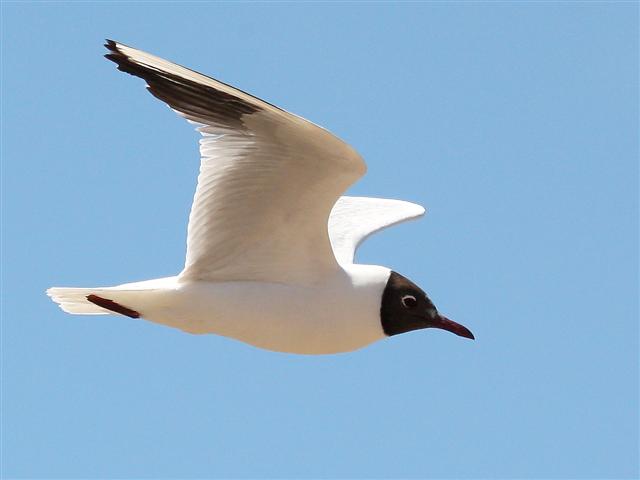
A Black-headed Gull balances in the breeze before continuing its circuit around the main lake.

One of the Common Terns that has been using the raft on the lake will now be busily feeding up before commencing its long journey southwards to somewhere in Africa for the winter and hopefully return next year.


Other wildlife seen included Mallard, Egyptian Goose, Canada Geese, Great Crested Grebe, Coot, Tufted Duck, Mute Swan, Blackbird, Whitethroat, Robin, Goldfinch, Greenfinch, Long-tailed Tit, Blue Tit, Great Tit and an overflying Grey Heron while the bees collected pollen from the brambles.

A few butterflies were seen including Brimstone, Gatekeeper, Green-veined White, Meadow Brown, Ringlet and Comma .... I have kept back a few pics for a future post.

As I made my way back to the car a barge puttered by .... the pilot totally ignorant of my presence!   FAB.

Monday, 28 June 2010

Norfolk Review (Part 3) - Cley Marshes

On day 4 we met up with our friends Tony and Jean for an anti-clockwise walk around Cley Marshes.
At least the sun shone for most of our walk although again there was no protection from the strong north-easterly wind except for when we dived into two of the hides to view the usual ducks but very few waders.
Male Marsh Harrier. (Circus aeruginosus)
Black-headed Gull. (Chroicocephalus ridibundus)
Distant shot of a male Bearded (Tit) Reedling. (Panurus biarmicus)
Happy family of Mute Swans.
I need more shade Mummy!
Common Tern. (Sterna hirundo)
Barn Swallow (Hirundo rustica) taking a brief rest from catching insects.
No apologies for posting another (Pied) Avocet. (Recurvirostra avosetta)
Painted Lady. (Vanessa cardui) looking a little worn.
After a late lunch [I had a baked tatty with cheese and a mixed salad] in the eco-friendly Information Centre we headed off to to CleySpy in Glandford for some retail therapy. Tony wanted to look for a new harness for his bins but we both ended up buying a new hat to shade us from the sun....or the rain!
Anita and I took a short walk through the model village, built by Sir Alfred Jodrell a century ago, admiring the reddish-pink waves of Valerian; the buildings including the Shell Museum, (regretfully closed)  built using local Norfolk red brick and flint with Flemish gables.We then headed down to the River Glaven, overlooked by the watermill (built in 1907), and then onto the water meadows.....
......where I finally got a chance to capture a resting male Orange Tip (Anthocharis cardamines).....FAB.

Thursday, 13 May 2010

Birding with Friends (Part 1).

A reasonably early start on Tuesday to drive to the south coast to meet up with David and June at  Rye Harbour Nature Reserve.  After a welcome cuppa in their holiday home we headed out onto the reserve with overcast skies and a very cold 'arctic' wind. With Skylarks singing, Linnets twittering and a distant Cuckoo calling our first waders were a small group of Avocets.    
Distant Avocets.
From a new hide overlooking open pools and shingle ridges we spotted Common Terns, 3 Little Terns, Knot, Redshank, Ringed Plover, Grey Plover, Oystercatchers and Dunlin.  
Moving onto one of the hides overlooking the Ternery Pool. 


View of the nesting Gulls and Terns. 
A search with the bins soon revealed a few Common Gulls, large numbers of Mediterranean Gulls on the furthest bank, with their striking black heads and deep red bills, hidden amoungst the vast numbers of Black-headed Gulls that are so inappropriately named as the head colour is brown!  
Black-headed Gull.
With water levels so high, many of the shingle islands are still submerged so there is a premium on any available nesting space and the air was full of the constant scolding calls as the gulls and terns endeavoured to protect their alloted spaces.
Common Tern
We eventually moved onto another hide where there was very little close activity apart from a couple of Redshank feeding along the waters edge who provided a photo opportunity.
Common Redshank
Common Tern (Red bill with black tip).
Fly past by a Sandwich Tern (Black bill with yellow tip).

Other sightings included Little Egret, Mallard, Coot, Tufted Duck, Meadow Pipit, Reed Bunting, Cormorant, Lapwing and Sedge Warbler. The weather conditions worsened with the wind increasing and a rain front moved through so with freezing fingers we decided to return to the holiday home to warm up and eat our packed lunch and to decide on the destination for the afternoon (Part 2).    FAB.  

LinkWithin

Related Posts with Thumbnails