Thursday, 5 February 2015

Coot Fighting.


In a previous post entitled 'Walking on Water' I promised to share a few images of two Coot fighting. Whilst I don't consider these shots to be 'best quality' they do at least provide an indication of the effort and aggression expended when two individuals decide to battle it out on the water.

As you can see the feet are used as the main attacking weapon as each individual tries to gain supremacy and push its opponent under the water. In this instance they were fairly evenly matched and neither eventually gained overall control of the other but they certainly churned up the water!


The moral of this session was 'don't mess with a Coot when it's in a fighting mood'.  FAB.

Tuesday, 3 February 2015

Walking on Water.

During a brief stroll around Heron Pond in Bushy Park on Monday I spent some time watching two of our aquatic species from the Ralidae family that have no difficulty 'walking on water' .... when it's frozen.

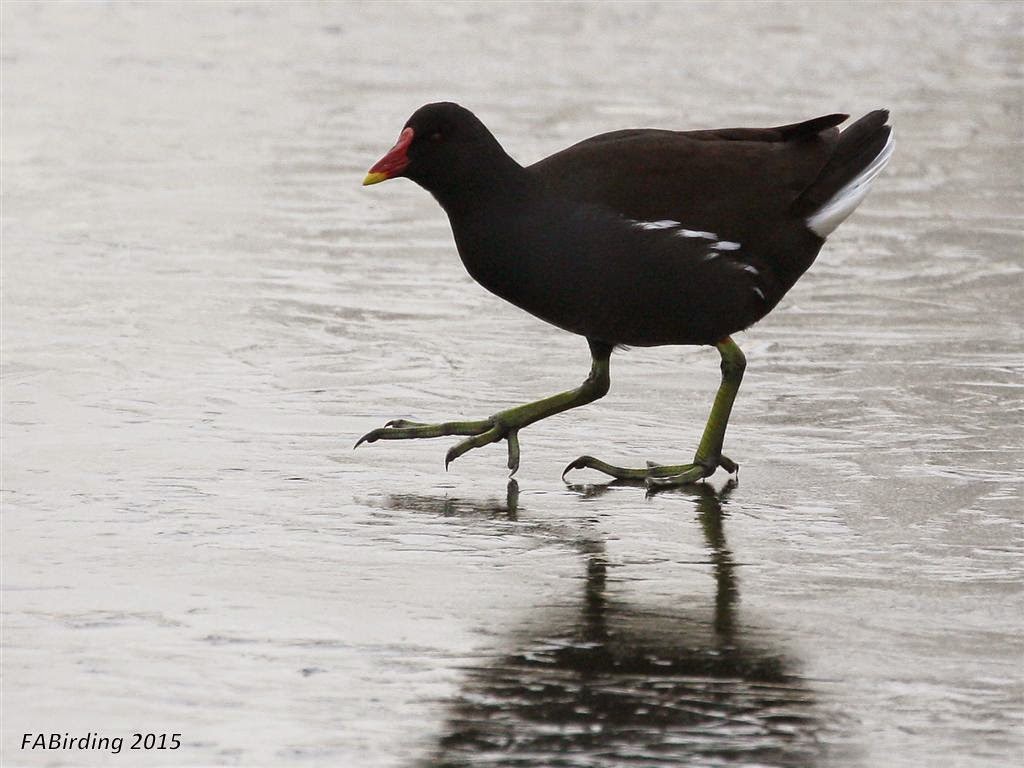
First up was the [Common] Moorhen (Gallinula chloropus) purposely stalking across the ice and typically carrying its tail high which it flicks up and down as it walks. Like other rails their long toes are spread well apart to provide them with excellent stability on such a slippery surface.


The other species was the [Eurasian] Coot (Fulica atra) with its distinctive white frontal shield and the lobed flaps of skin on its toes (see close up below). When fighting one another their feet play an important role in both attack and defence and I'll share a couple of recent images in a future post.


When one individual stepped off the ice into a small area of unfrozen water it was interesting to see how it gripped the ice ledge with its sharp toenails and used its wings to provide the impetus to regain its footing back on the thin ice.  FAB.


Linking to Wild Bird Wednesday.

Saturday, 31 January 2015

January Patch Birds.

My wildlife watching got off to a slow start this year due to a virus contracted over the Christmas period that laid me low for a couple of weeks. Local patch water fowl sightings have been thin on the ground due to the pond freezing over a week ago and everything appeared to be in hiding.

Fortunately four Northern Shoveler present on the pond since early December were still around prior to the water freezing up and one male in full breeding plumage was close enough during one patch visit to provide an opportunity for a few images.
Other sightings have included up to six Teal; with four males displaying to two females; and two pairs of Mandarin Duck plus the resident Mallard and Moorhens.


Northern Shoveler

Moorhen

At this time of year it is not unusual to see large parties of Long-tailed Tits foraging through the woodland but obtaining a clear shot as they flit from perch to to perch is another challenge! On a few occasions the flocks have included one or two Goldcrests but I have still to capture a decent image of this tiny species.


Long-tailed Tit.


One species that rarely allows a close approach is the Jay but I was fortunate recently to catch one searching through the leaf litter and totally oblivious to me creeping close enough for this cropped shot.

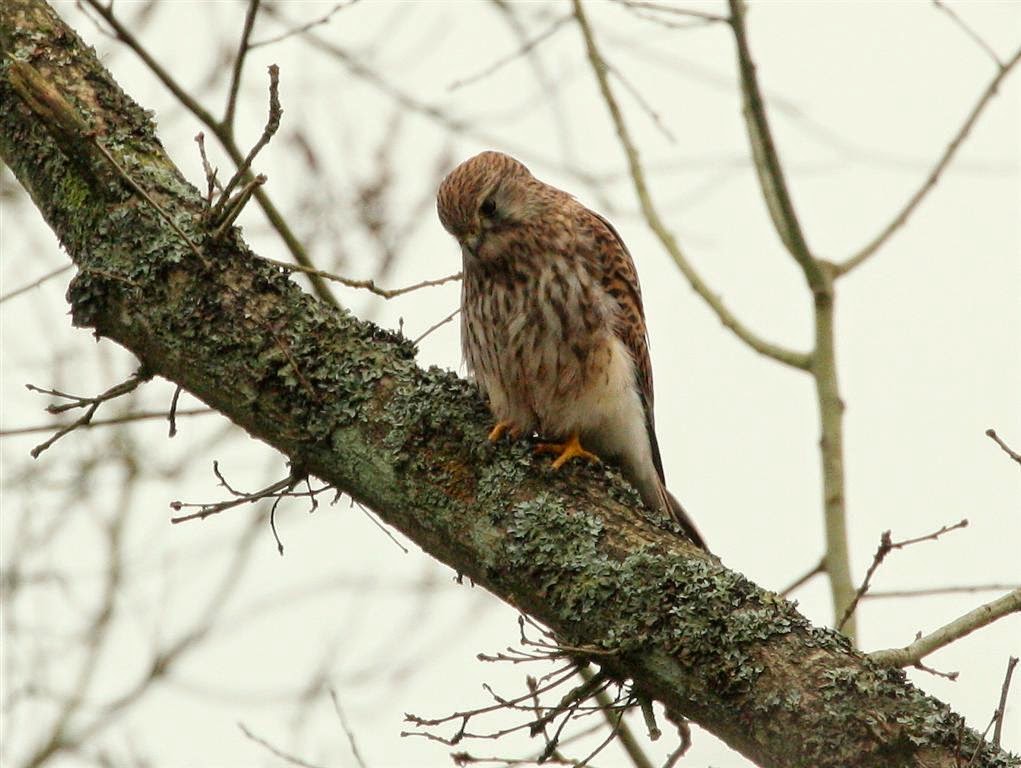
During this continued cold and wet weather raptor sightings have included Kestrel, a Sparrowhawk darting through a large flock of Redwing, Common Buzzard and an over flying Red Kite. 


I spotted this (juvenile or female) Kestrel perched in a tree close to one of the main paths and watched it surveying the ground below for a possible meal. After a few minutes it flew to another perch to continue its vigil before eventually flying away.


One Black-headed Gull has taken up residence on the main pond and regularly takes flight when another interloper flies in and chases off any competition!


My patch tally for January has now reached 40 species and you can view the full list on my Bird Sightings page. FAB.

Linking to Saturday's Critters hosted by Eileen.

LinkWithin

Related Posts with Thumbnails