Monday, 9 May 2016

Troglodytes troglodytes.


On any of my walks it would be very unusual not to encounter this small active brown bird with its cocked tail often just announcing its presence with its loud voice before promptly disappearing into deep cover.

The [Eurasian] Wren (Troglodytes troglodytes), otherwise known as 'Jenny Wren' is our commonest UK breeding bird, although it does suffer declines during prolonged, severely cold winters. Currently the local population is in very healthy.

The scientific name is taken from the Greek word "troglodytes" (from "trogle" a hole, and "dyein" to creep), meaning "cave-dweller", and refers to its habit of disappearing into cavities or crevices whilst hunting arthropods or to roost.

Click below to check out its remarkably loud voice: 


If there are any problems with the sonogram here is the direct link: http://www.xeno-canto.org/313805


This individual was very obliging during a recent early morning stroll around Castle Hill LNR.

Linking to:
Through My Lens
image-in-ing
Wild Bird Wednesday

Saturday, 7 May 2016

Friday Flutters: A Blue and Green Day.


With much higher temperatures today the hour spent on my Ashtead Common transect turned out to be mainly a blue and green affair. The first butterfly recorded was a Holly Blue (above) but the most predominant species was the Brimstone (below) with 12 individuals logged in addition to Small White (1), Speckled Wood (1) and a very flighty single Green Hairstreak.

A few of the ancient oaks are in full leaf but many of the very old pollarded veterans are still waking up. It was very quiet at Flag Pond and in case you wondered that is the muddy colour of the water all year round due to the underlying clay and it plays host to three species of Newt.

A slight detour off my prescribed route provided a few views of two regular woodland species; the Treecreeper (left) and the Nuthatch which was particularly vocal today.Another surprise while watching these 'creepers; was the single hoot call of a Tawny Owl somewhere high on the ridge ... most unusual for the time of day!

Back at home I spent an hour or two doing a few tidy up jobs in the garden while listening and watching three Swifts screaming high overhead plus visits by a Holly Blue and a Small White butterfly.

I am not a fan of non-native species but these 'Spanish' Bluebells do provide a splash of colour at the moment. These invaders will have to be removed when I find the time and replaced with our native stock. Elsewhere a few different varieties of Tulip are hanging on and the herbaceous greenery is bulking up very fast.


Nesting Update:
One final good bit of news today is that we finally have evidence that a pair of Blue Tits are using the nest box in the Birch at the bottom of the garden. 


I will be monitoring their progress and hope to get some better images over the coming weeks. FAB.


Linking to:
Saturday's Critters

Today's Flowers
Nature Notes 

Friday, 6 May 2016

All Fenced In.

When I visited my local birding patch early this week this was the scene that greeted me. The posts have been erected and electric tape strung between them to act as a barrier for the cattle that will shortly arrive as part of the annual land management scheme. 

Unfortunately this means that my previously 'free' access is now restricted to the static gateways and 'squeeze' openings unless I grow some longer legs! 


This season they have extended the fenced area to include a small part of the woodland boundary presumably so the cattle will trample and grub out some of the unwanted undergrowth.


Not very much has changed in the way of bird life except I monitored a few more Common Whitethroats flitting in and out of the dense scrub and logged my first patch sighting for this year of a Garden Warbler.

With the increase in greenery this migrant 'LBJ' was difficult to lock onto as it moved around in-between bouts of singing and feeding. 

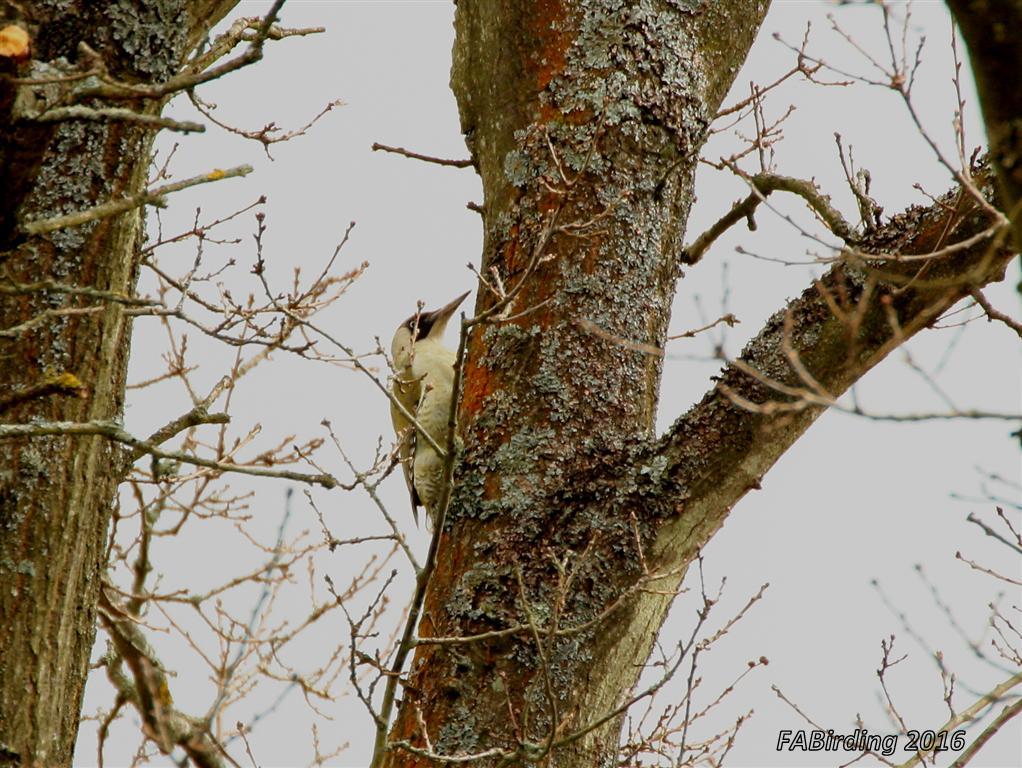
I often hear the 'yaffle' of a Green Woodpecker but they typically fly off as soon as they detect an intruder getting too close. Fortunately I managed a quick shot before this individual (below) moved into hiding behind the tree trunk.


In the past few weeks this gate, where I often watch the large gatherings of winter thrushes in the paddocks of one of the local riding stables,  has gained some additional woodwork presumably to deter unwanted guests.


The stables also use a system of tape fencing to cordon off separate sections for the horses and one of the taller posts was being used by a Mistle Thrush.


The gate above is where I listen to Skylarks singing and also provides an excellent viewpoint over Rushett Farm to look out for soaring Common Buzzards and the occasional fly by of a Red Kite. This week the young cereal crop was being sprayed and not too far away I spotted my first Speckled Wood and was also pleased to see that the Lapwings (possibly 3 or 4 pairs) are still defending their nesting territories from the large population of resident corvids.

Linking to:
Good Fences
I'D-Rather-B-Birdin'

LinkWithin

Related Posts with Thumbnails